Consumption-Based Pricing Models for Edge Compute Workloads
Edge providers need billing built for workloads that move and spike, not flat fees.
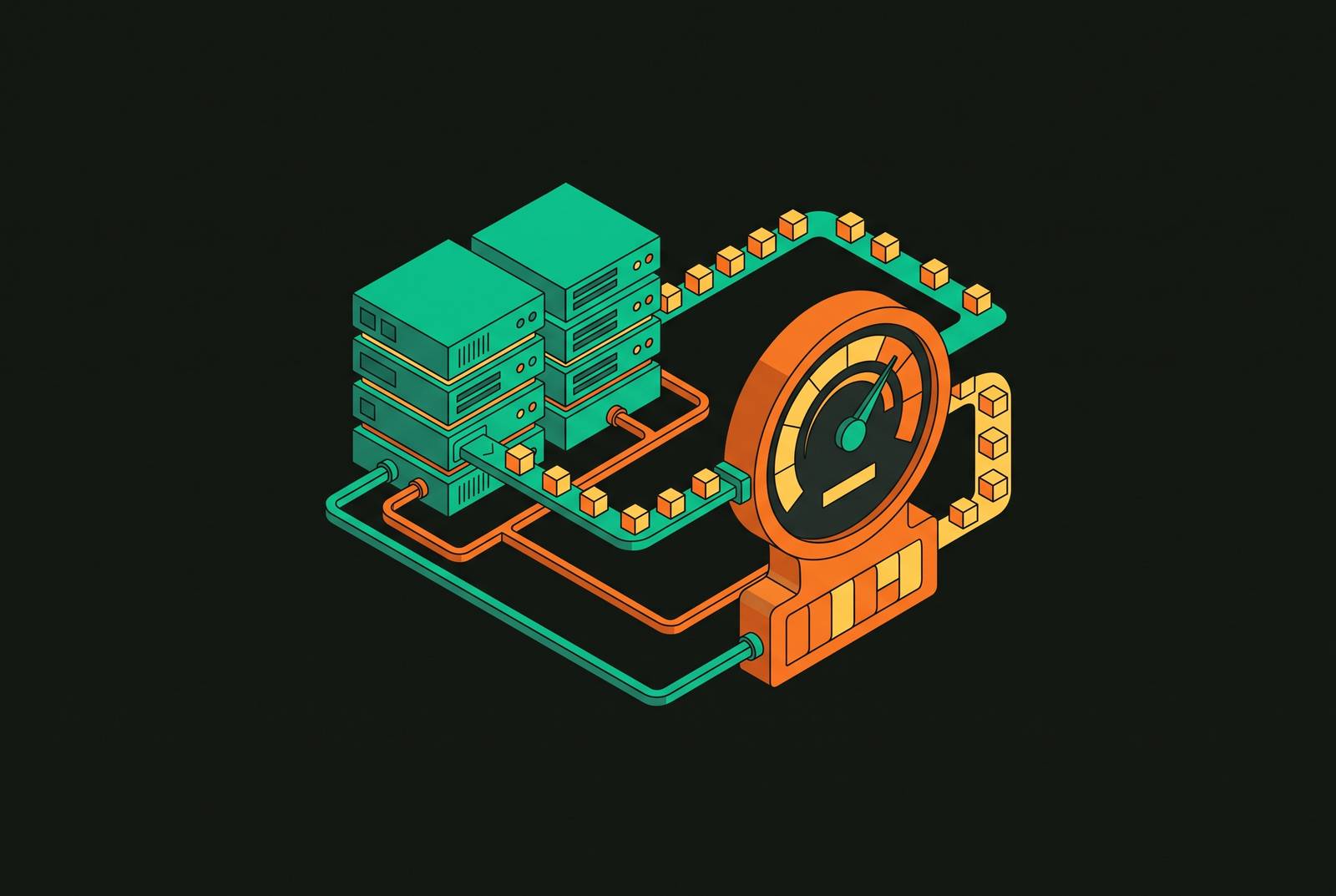
Edge providers keep selling distributed, bursty, latency-sensitive workloads using billing logic built for something else entirely: stable, centralized compute that sits still and behaves. Flat fees and seat licenses assume demand that behaves. Edge demand doesn't. It moves between nodes, spikes without warning, and racks up cost in at least four places at once. Consumption-based pricing, done right, is the only model built for how this compute actually gets used. The four billing dimensions behind it are what separate a bill that reflects reality from one that punishes you for building something that works.
Large enterprises still own most edge deployments, though smaller companies are catching up by renting edge capacity through consumption bundles instead of buying racks of hardware outright. The bigger shift is what's being bought. Hardware still takes the largest cut of spend, but the growth is in services, and that's exactly where consumption pricing takes over: once a company isn't buying a box, it's paying for what the box does.
What the box does varies wildly by industry, and that variance is the whole argument for this piece. Manufacturing runs continuous sensor data off factory floors, a steady drip that per-request pricing handles fine. Healthcare's edge workloads look nothing like that: bursty, episodic, tied to a diagnostic event rather than a constant stream. One pricing model can't serve both a factory sensor feed and a medical imaging pipeline without shortchanging one of them, and providers who pretend otherwise are the ones to be wary of.
Then there's AI agent traffic, the fastest-moving category on the map, which grew roughly 17x on one major global network between June 2025 and May 2026. That's not linear growth. That's a workload type arriving faster than most billing systems were built to track. No single benchmark tells a developer what edge compute "should" cost. The only reliable move is understanding the billing dimensions underneath the sticker price, because those dimensions, not the marketing name on the plan, are what actually determine the bill.
The four billing dimensions that determine what you actually pay at the edge
Strip the marketing off any edge pricing model and it comes down to some combination of four measurements. Miss one and the invoice will surprise you.
Requests, or invocations, are the easiest to understand: a count of function calls, API hits, task submissions. Fine when each request costs roughly the same to process. It falls apart the moment request complexity varies, because a bursty workload can throw off millions of requests in a short window, and a per-request price that looked cheap on average suddenly doesn't.
CPU time, or compute duration, charges for processing actually done, not the wall-clock time a function sat around waiting on something. That distinction sounds small and isn't. A function billed only for active CPU cycles, rather than for how long it stayed "alive," costs far less for I/O-heavy work like database lookups or external API calls, since most of that time is spent waiting, not computing. Flip the workload to something compute-heavy, image processing, inference, compression, and CPU time becomes the number that decides whether the bill is reasonable or alarming.
Egress, or data transfer, is the dimension people underestimate most, and it's the one edge providers exploit hardest. Networking can eat a large share of a total edge deployment budget, and that's a real problem for edge specifically, because the entire point of edge computing is moving data closer to users, which by definition means crossing more provider boundaries more often. Charge for every one of those hops and the edge value proposition starts eating its own tail. Zero-egress pricing, where outbound transfer isn't billed separately, changes that math completely, especially for anything serving large files or media, where egress can outstrip the compute bill entirely if it's metered.
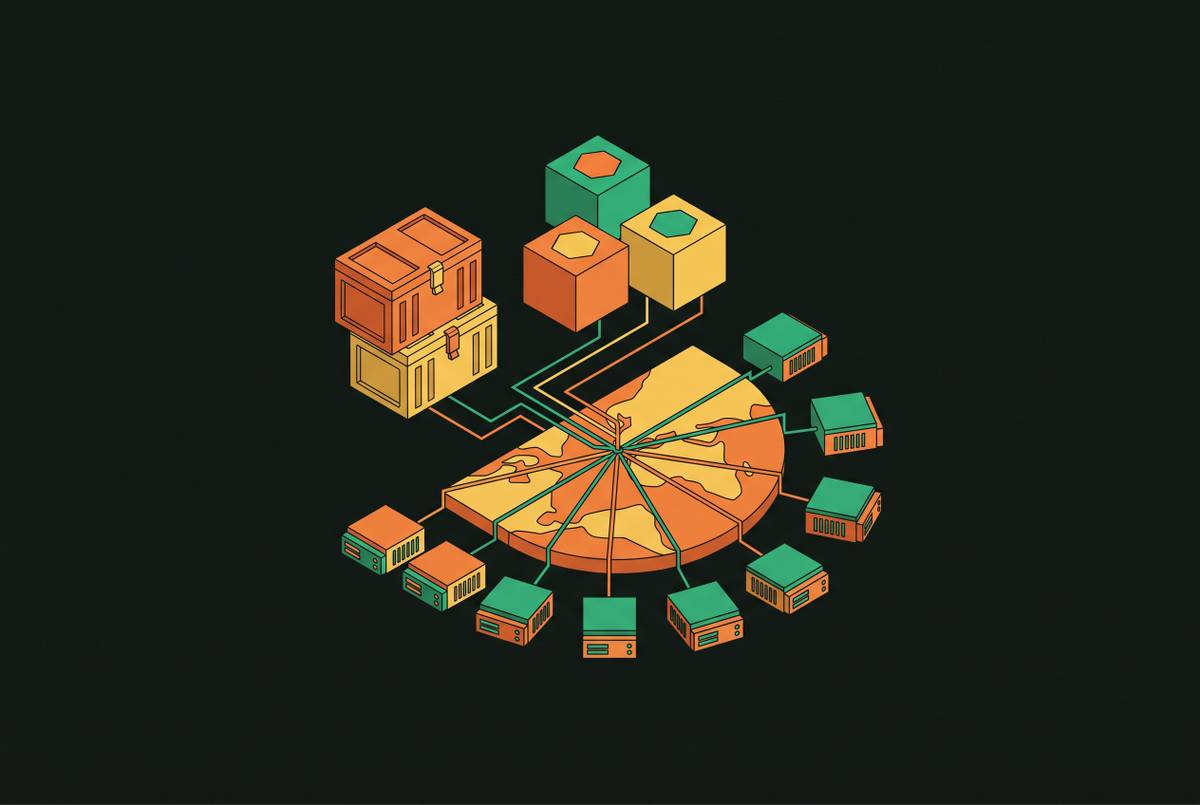
Geographic distribution, or node selection, is the one dimension genuinely unique to edge. Local capacity at any given node is finite, so workloads shift between nodes dynamically, and infrastructure cost varies by location. Providers need charging engines built to track workloads as they move across a finite-resource, multi-node environment, or the bill simply won't reflect what happened. Cost per compute unit at edge sites runs well above centralized data centers, and that gap gets recouped somewhere, either baked into the per-unit rate or tacked on as a location premium. Data-sovereignty rules like the EU Data Act add a further constraint: if a workload is legally restricted to certain nodes, the provider loses the option to route it to cheaper capacity, and that cost shows up on the invoice one way or another.
A fifth dimension is emerging for specialized computational workloads: inference compute units, tokens, credits, whatever the provider calls its normalized processing-time measure. More on that below. For now, what matters is that these four dimensions interact. Batch requests to cut down your request count, and CPU time per batch often climbs right back up. Optimize one dimension and you're frequently just pushing the cost onto another.
The eight pricing model structures edge providers actually use
Eight distinct pricing structures show up in commercial use across edge providers, and they're rarely used alone. Most providers stack two or three, which is either clever bundling or a way to obscure which dimension is actually driving the bill, depending on how charitable the reader wants to be.
IaaS consumption bills for physical and virtual infrastructure actually used. It's the most direct exposure to the four dimensions above, and its complexity comes entirely from workloads moving between nodes.
PaaS subscription with usage tiers charges a base platform fee plus metered consumption above an included threshold, common for orchestration layers, and matches the pattern used by CPU/RAM-based edge hosting products.
SaaS with an experience premium hides the infrastructure entirely. The customer pays for an outcome, the provider eats the edge complexity, and extra charges show up for latency-sensitive or high-availability tiers.
Hardware-as-a-Service delivers on-prem servers as a monthly subscription, turning a capital expense into an operating one. AWS Outposts, priced around $5,000 for a 1U unit, shows how much this can restructure a company's edge budget, moving it from a line item on the balance sheet to a recurring bill.
The CDN-origin model inherited its logic from bandwidth billing and is increasingly stacking compute charges on top. That seam, where CDN bandwidth billing meets compute billing, is where a lot of surprise costs hide.
License models charge a fixed fee per seat, user, or device. Predictable, and structurally wrong for anything traffic-driven, though they persist in enterprise IoT deployments where the device count barely moves month to month.
Managed service bundles roll infrastructure, networking, applications, and maintenance into one fee. Easy to budget for, hard to audit, since the bundle hides which of the four dimensions is actually driving the cost.
Co-location sells space, power, cooling, and bandwidth by physical footprint, for organizations running their own hardware at edge facilities. The compute cost, in this case, sits entirely with the customer.
The market is moving toward finer-grained, per-function and per-transaction billing, plus edge marketplaces that let organizations resell excess capacity. Hybrid models, a base fee plus metered usage on top, are winning because they give the provider a revenue floor and the customer variable upside. The tradeoff: two cost drivers to track instead of one, and most teams only notice the second one after the bill arrives.
What a mature consumption-based rate card looks like in practice
One published rate card is worth studying line by line, because it shows exactly how these billing dimensions turn into an actual invoice.
The free tier covers 100,000 requests a day, plenty for real prototyping. The Workers Paid plan runs $5 a month and includes 10 million requests plus 30 million milliseconds of CPU time. Past that, it's $0.02 per additional million requests and $12.50 per additional million milliseconds of CPU time. For any compute-heavy workload, that second number is the one that matters. Teams need to model CPU consumption directly rather than eyeballing request counts and hoping for the best.
The idle-time rule underneath this is the real structural decision: billing counts CPU time only, never time spent waiting on network I/O. That single choice decides whether an I/O-bound function, one that spends most of its life waiting on a database response, gets billed fairly or gets punished for waiting.
Object storage (R2) follows the same logic outward. Standard storage runs $0.015 per GB-month, Class A operations (writes, lists) run $4.50 per million, Class B operations (reads) run $0.36 per million, and egress sits at $0 flat. Zero egress isn't a footnote, it's the whole point: it rewrites the economics for anything serving large files or heavy outbound traffic, against a model that meters every byte leaving the building. An Infrequent Access tier drops storage to around $0.01 per GB-month with a retrieval charge attached, trading a cheaper storage rate for a pricier read.
AI inference (Workers AI) runs $0.011 per 1,000 Neurons, with 10,000 Neurons free daily. Neurons are a normalized unit meant to compare GPU compute across different model sizes fairly. Per-model pricing replaced an older bucket system on February 20, 2025, so rates now track actual model size and capability instead of a rough average. Inference bills on consumption, not by the hour, so there's no reserved-GPU overhead sitting idle between requests.
The Pro plan now runs $25 a month, with recent changes to how Workers CPU time gets metered. Enterprise deals get negotiated individually, usually annually, with committed-use discounts that lower the per-unit rate without abandoning the consumption structure.
One trap worth naming directly: dynamic routes inside a Pages deployment, middleware, server-side rendering, edge API routes, bill under Workers rates no matter how the app was originally deployed. A Next.js app running server components on every route is, cost-wise, a Workers app, full stop. Miss that distinction while budgeting and the invoice won't match the mental model. This plan structure reflects that consumption logic keeps creeping into the network side of the bill, not just compute.
How workload shape determines which pricing model wins, and the Workers vs. Lambda cost comparison
No provider is categorically cheaper, and anyone selling that pitch is selling something else too. Cost is a function of workload shape, full stop, and the same two providers can flip which one wins depending on what's actually running.
Vantage's comparison of Workers against AWS Lambda makes this concrete. In one scenario, Lambda comes out 20-25% cheaper. In another, Workers wins by anywhere from 10% to 200%. That swing carries real signal. It's driven by request volume, compute duration per request, the ratio of I/O wait to active processing, and how spread out the workload is geographically.
Match the workload to its dominant cost driver and the picture clears up fast. High-request, low-compute work (API gateways, auth checks, routing logic) lives and dies by request count, since CPU time per call is minimal and per-request pricing is the most legible metric available. Low-request, high-compute work (image processing, video transcoding, ML inference) flips that: CPU time takes over as the dominant cost, and idle-time billing has a real edge over anything billed by wall-clock duration. I/O-bound workloads, database proxies, external API orchestration, benefit most from CPU-time billing specifically, because most of their runtime is spent waiting rather than computing. Egress-heavy workloads, media serving, large asset delivery, bulk export, live or die on the egress rate, and zero-egress pricing changes the entire calculation for edge storage. Globally distributed workloads that need to run close to users across many regions bring geographic pricing and node-selection premiums into play in a way none of the other categories touch.
Profile the workload before modeling the cost, not after. Request rate, CPU milliseconds per call, the fraction of time on I/O wait, egress volume: those four numbers decide which provider and which pricing model wins for a given application. Bursty traffic, edge's signature pattern, strains per-request pricing but fits consumption billing with no minimum spend almost perfectly, since paying only during active periods is the economically correct match for traffic that refuses to behave.
There's a newer, more technical wrinkle too. Research out of TU Darmstadt, published under the PRICE framework, shows edge nodes under heavy load can serve more total requests by shifting some toward lighter execution variants, using pricing signals tied to live utilization to guide that shift. Coupling live utilization signals to per-request quality selection is still an emerging pattern, but it points toward where edge pricing engines are headed next.
How AI agent workloads change the consumption pricing equation
AI agents don't just add more requests to the pile. They change the shape of the request itself. A single agent task can run long, hold state across multiple steps, and call out to several tools or models before finishing, which breaks the core assumption baked into most serverless pricing: that a request is short, stateless, and self-contained.
The roughly 17x jump in AI agent traffic on one major global network between June 2025 and May 2026 marks a substantial shift, and it's a signal that the workload providers are now pricing for is a genuinely different animal than the one their billing models were built around. A billing engine designed for short HTTP calls has to stretch to handle a process that might run for minutes, touch several inference calls, and hold context in memory the entire time. Providers that already track CPU time, inference units, and egress separately are better positioned to adapt, since agent workloads mostly stress those same four dimensions harder rather than invent new ones.
The ones still leaning on flat fees or per-seat licensing are going to find out the hard way that an AI agent doesn't care what plan you're on. It just runs until it's done, and the bill runs with it.