Global Data Locality for Edge Applications Without Multi-Region Complexity
Latency and compliance drive adoption of truly distributed databases over hand-managed regions.

Data locality used to mean one thing: put your static files close to your users. Now it means something much harder: put the actual database record, the actual write, the actual state of the world, close to whoever is asking for it, everywhere, all the time. Most teams still solve this the way they solved it in 2015, by picking a few cloud regions and hand-wiring replication between them. That approach is running out of road, and the reason is part physics, part regulation.
Start with the physics. A request that travels from Jakarta to a data center in Virginia and back is going to cost 50 to 100 milliseconds no matter how good the code is. Push the processing to the edge, close to the user, and that number drops to somewhere in the 10 to 20 millisecond range, sometimes lower. For a static webpage, nobody notices. For autonomous vehicle coordination, live video, financial transaction validation, or an AI agent expected to respond conversationally, that gap is the difference between a product that works and one that visibly doesn't.
Now the regulation. Gartner has pegged the share of the world's population living under some form of modern privacy law at 75%. GDPR alone can fine a company €20 million or 4% of global annual revenue, whichever is bigger, and cumulative GDPR fines had reached €7.1 billion by early 2026, with cross-border data transfers a favorite target for enforcement. Stack DORA for financial services (effective January 2025), NIS2 for critical infrastructure (transposed by October 2024), the EU's own Cloud Sovereignty Framework (October 2025), India's DPDPA, and China's PIPL and Data Security Law on top of that, and "where does the data live" stops being an infrastructure diagram and becomes a legal filing. Even storing data in an EU availability zone doesn't fully close the loop if the provider is US-headquartered: the CLOUD Act lets US authorities compel production of that data regardless of which continent it sits on.
The market has noticed. MarketsandMarkets projects the edge data center segment growing from $50.86 billion in 2025 to $109.20 billion by 2030, a 16.5% compound annual growth rate, and the drivers cited are residency mandates, AI workloads, and 5G, not video caching. This is a piece about what changes when the network itself, rather than the application team, takes on the job of keeping data close and compliant.
What "data locality" actually means at the application layer, and what it doesn't
Three separate things get lumped under "edge" and only one of them is actually hard.
Content delivery locality, caching a static image or video file near the user, has been solved for two decades. Compute locality, running business logic or an auth check near the user, is mostly solved too, thanks to edge functions that spin up in milliseconds with no meaningful cold start. Data locality, the part where the actual persistent record, the row in the database, the object in storage, the message in a queue, lives and gets read and written near the user who owns it, remains the unsolved layer. That's the one this piece is actually about.
Here's the trap teams fall into. An edge function runs beautifully close to a user in Singapore, shaves the latency down to single digits, and then makes one database call to a primary sitting in us-east-1. The entire performance win evaporates on that one round trip. Call it the fast-edge, slow-database problem: compute gets distributed, storage stays put, and the architecture ends up no faster than if nothing had moved at all.
Actual data locality needs three things working together. Storage that is itself distributed, so reads and writes get served from a node physically near the user rather than routed to one central primary. A consistency model that doesn't require every write to detour through a single location before it's considered valid. And an awareness, built into the system rather than bolted on, of exactly where each piece of data physically sits, because that answer now has legal weight, not just a performance score attached to it. Gartner's frequently cited estimate has 75% of enterprise data eventually processed at the edge, up from just 10% in 2018. That gap is the whole story: most infrastructure still isn't built for where the data needs to go.
How teams typically try to solve this with multi-region deployments, and the operational cost that follows
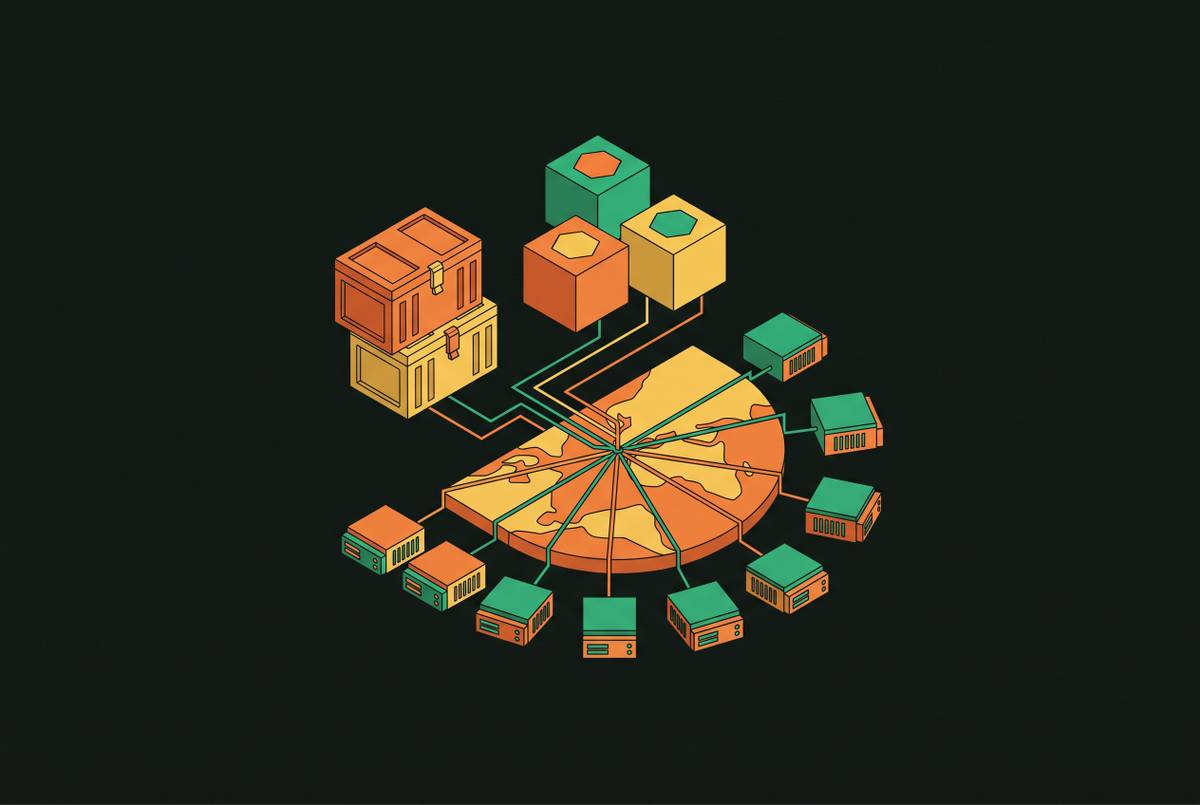
The standard fix is brute force. Pick three to five regions based on where users are. Deploy the full stack, compute, database replicas, object storage, secrets, networking, into each one. Wire up cross-region replication, failover, and some flavor of latency-based routing. Then keep all of that running, forever, region by region.
This is where the bill comes due, and not just the cloud bill. Strong consistency across regions requires coordination, and coordination reintroduces the exact latency the whole project was meant to remove. Drop to eventual consistency instead, and now the application has to tolerate stale reads, which most transactional workloads can't. Meanwhile, residency enforcement gets murkier the moment a major cloud provider's own replication logic kicks in: companies frequently discover their data has quietly spread across five or ten global regions they never explicitly chose, which is precisely the problem multi-region was supposed to fix, made worse by the fix itself.
Every region added is another set of failure modes, another runbook, another rotation for whoever's on call. And the idle capacity sitting warm in each region, waiting for traffic that may never spike there, gets billed whether it does anything or not.
The real cost shows up in where engineering time goes. Teams that should be shipping product features spend weeks arguing about region topology, chasing replication lag in a Grafana dashboard at 2 a.m., or preparing for a compliance audit that a smarter architecture would have made unnecessary. Smaller teams usually can't staff for this properly, so they pick one of two bad options: skip it and eat the latency and compliance risk, or over-provision and eat the cost. Multi-region, done by hand, treats global distribution as an operations discipline. It should be an infrastructure primitive. As long as it isn't, the entire burden sits on the application team, not the platform underneath it.
What a globally distributed network abstraction changes about this model
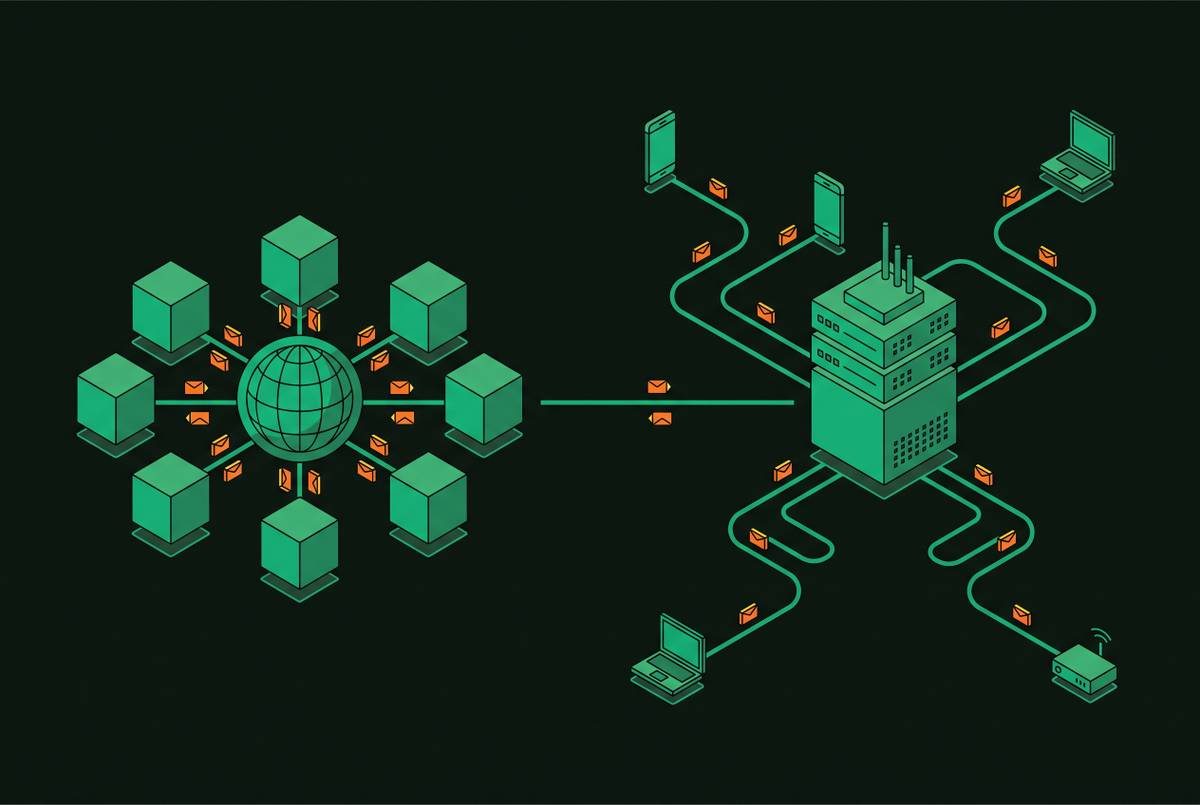
Flip the model and the question changes. Instead of "which three regions do we deploy to," it becomes "why are we thinking in regions at all." A network that runs compute and stores data across hundreds of points of presence simultaneously turns routing, replication, and locality enforcement into properties of the network layer itself, not settings the application team has to maintain by hand.
For that to actually work, the underlying network needs a few things to be true at once. It needs to already be physically close to users everywhere, so "close" is the default state rather than a deployment choice someone has to remember to make. Performance has to hold steady across that whole footprint, not just be fast in North America and Europe while everywhere else lags. The data layer, storage, state, queues, has to sit at the same distributed layer as the compute, not centralized somewhere behind it acting as a bottleneck. And the pricing has to match the architecture: no per-region idle charges, no fee for keeping a warm server on standby in a city with low traffic.
Reaching the world's internet-connected population within 50 milliseconds isn't a marketing line, it's the physical precondition for any of this to be real. One network spanning more than 335 cities became the fastest provider in 60% of the world's top networks by December 2025, up from 40% just three months earlier in September, adding 40 countries and 261 networks to that lead in roughly ninety days. Underneath that jump was a migration to Rust-based request handling (internally called FL2), which delivered a 25% performance boost and shaved about 10 milliseconds off median response time. The number that matters here isn't the Rust rewrite itself, it's that scale and speed moved in the same direction instead of trading off against each other. Once the network is the multi-region deployment, the team's job stops being "operate N regions" and starts being, simply, "write the application."
The primitives that make distributed state manageable without manual coordination
Most edge deployments break exactly at the seam between stateless and stateful. Edge functions handle each request independently, fast, distributed, with cold starts fast enough (sub-5ms, with a 99.99% warm-start rate) that they're barely worth measuring. But state has to live somewhere, and the only real question is whether that somewhere is one faraway database or a store sitting right next to the user.
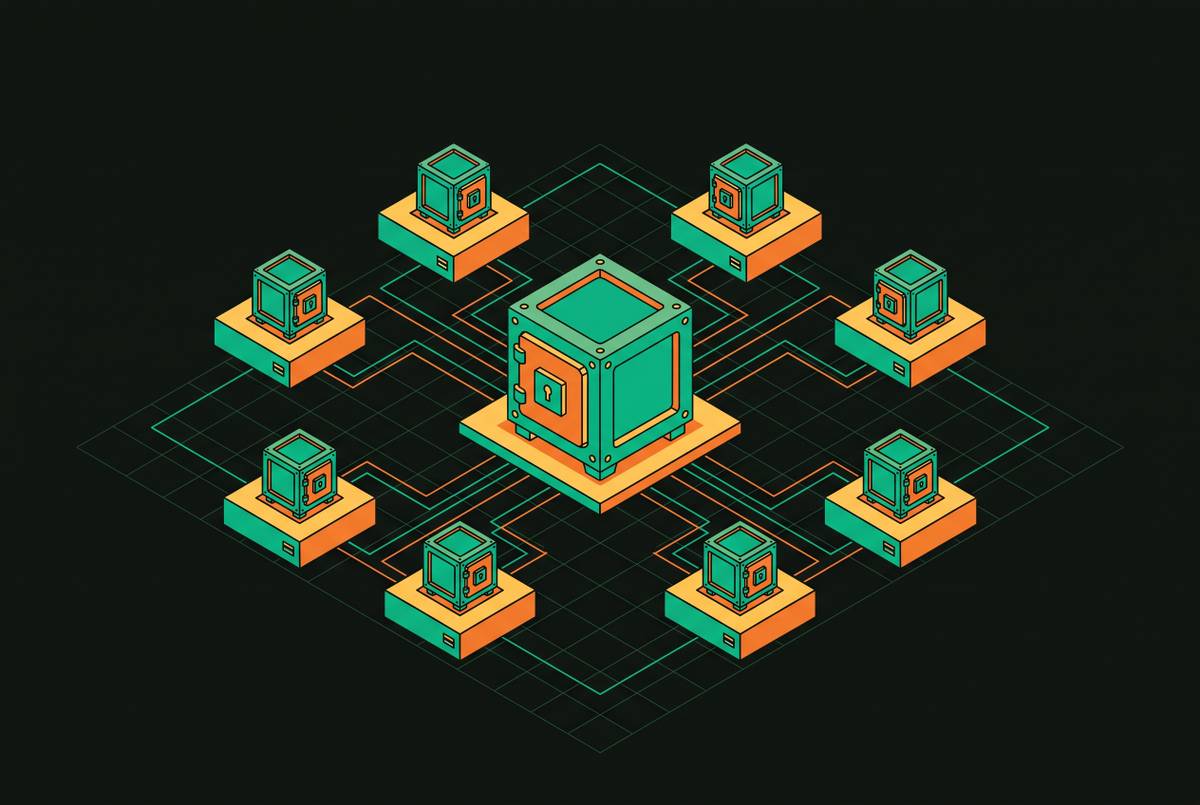
This is what Durable Objects are for. A Durable Object is a single instance of a class carrying its own persistent state (backed by SQLite), its own memory, WebSocket support, and the ability to schedule future work through alarms. It's globally unique, but it physically runs wherever it's first accessed, or wherever a developer pins it, which means locality can be enforced by jurisdiction rather than left to chance. Because one object owns a given piece of state outright, there's no race between replicas to referee, no distributed lock to write and debug. The free tier is now generally available, which removes the last excuse for not building on it. At production scale, the Agents SDK builds stateful AI agents directly on top of Workers, with each agent running as its own Durable Object, complete with persistent SQLite storage, WebSockets, and alarms. Same primitive, doing double duty as the backbone for agentic workloads.
Object storage follows the same logic. R2 is S3-compatible with no egress fees, a billing detail that matters more than it sounds like, because a fee per gigabyte leaving a region is a fee that punishes exactly the kind of distribution this whole architecture depends on. Paired with Workers, reads happen at whichever edge node is nearest the user while writes stay consistent without the application ever touching replication logic directly. R2 also shows up as an optional data source for AI Search, the managed retrieval-augmented generation primitive, alongside plain websites and direct file uploads, so the same locality model extends into retrieval workloads too.
Long-running processes get the same treatment through Durable Workflows, now generally available, which handle retries, fan-out, and multi-step sequences without a separate orchestrator running per region. A workflow that takes twenty minutes doesn't need a server sitting idle and billing by the hour just to keep the clock running. And because everything here bills on actual consumption, requests served, storage used, a team deploying globally pays for what got used, not for five sets of replicas sitting warm and unused in regions nobody visited that day.
How data residency and compliance requirements map onto this model
Compliance gets genuinely hard when replication is a black box. In a conventional multi-region setup, proving to a regulator where data actually lives means auditing where replication actually sent it, not just where the deployment plan said it should go. As noted above, that's exactly how companies end up with data quietly scattered across five to ten regions they never explicitly signed off on, and most teams don't have the tooling to reconstruct that map after the fact.
A network-level abstraction turns that audit into a setting. A developer can pin a Durable Object or an R2 bucket to a specific jurisdiction, EU-only, for instance, instead of letting the system place it wherever performance suggests. That's a declarative constraint, one line of configuration, not a six-month infrastructure project. The same architecture that gets latency down to single digits for users everywhere also lets a team say, flatly, this person's data does not leave Germany, without touching the rest of the stack.
Jurisdiction, not just geography, is the deeper issue. The EU's Cloud Sovereignty Framework, introduced in October 2025, laid out eight Sovereignty Objectives and a weighted Sovereignty Score, incorporating SEAL levels, that factors in exposure to foreign legislation, the CLOUD Act being the obvious example. Choosing infrastructure now means asking not just where the servers sit but whose laws the provider answers to, which makes this a vendor selection question as much as a technical one. Approaches to cross-border data flow are converging into hybrid frameworks that demand jurisdiction-level control at the data layer itself, not a policy document sitting in a compliance folder.
That shift changes the posture entirely. When placement is enforced by the platform rather than reconstructed after an incident, residency stops being something audited after the fact and becomes something verified continuously. The compliance model moves from reactive, find the violation, write the remediation plan, to preventive: the data simply cannot leave the jurisdiction, because the system won't let it.
Where AI inference fits into the data locality picture
Inference is not a normal API call, and treating it like one is where a lot of "AI at the edge" pitches fall apart. Loading a model, generating tokens, streaming a response back, all of that carries real weight, so the latency penalty for routing it to one central data center scales up proportionally compared to a simple request. Agentic workflows make this worse by design: each step often calls inference again, so a single slow hop to a distant endpoint doesn't just cost once, it compounds with every subsequent call. Getting a model to respond in under 100 milliseconds worldwide requires inference itself running near the user, not just the surrounding request-routing logic.
The demand curve backs this up. Workers AI inference requests grew 4,000% year-over-year in the first quarter of 2025, a growth rate that says less about hype and more about how fast developers move workloads once edge-native inference infrastructure is actually available to them.
There's internal evidence too, and it's a useful gut check on whether any of this is production-ready or just a roadmap slide. In the thirty days before this reporting, 93% of one network provider's own R&D organization used AI coding tools built on its own edge platform, a workload that drove 20 million requests through its AI Gateway, processed 241 billion tokens, and served inference to more than 3,683 internal users. That's not a pilot. That's an engineering org eating its own cooking at a scale most companies never reach with a customer-facing product, let alone an internal tool.
None of this is free of risk, and it would be dishonest to pretend otherwise. Gartner predicts more than 40% of agentic AI projects will be canceled by 2027, citing runaway costs, unclear value, and thin risk controls. Infrastructure that treats governance, access control, token cost tracking, catching a shadow instance before it runs up a bill, as a built-in feature rather than an afterthought isn't a nice-to-have on top of the locality story. It's the part that decides whether the other 60% of agentic projects survive long enough to matter.