Inline Traffic Inspection for SaaS Applications in SASE
Encrypted SaaS traffic needs inspection at the application layer, not just the network edge.
SaaS traffic rides on HTTPS, same as everything else on the internet, which means the network layer has no idea whether a session is a Google search or someone quietly exporting the customer database out of Google Drive. The average enterprise now runs SaaS apps across multiple cloud providers, and hybrid work has pushed most of those sessions outside any office the firewall ever watched. Blocking the domain outright is too blunt an instrument; letting everything through is just negligence with better branding. This isn't a firewall problem. It's an architecture problem, and SASE's inline inspection pipeline is the first real attempt to fix it where it actually lives.
Start with the credential math, because it sets the stakes for everything that follows. The Verizon 2025 Data Breach Investigations Report found credential abuse behind 22% of breaches and 88% of basic web application attacks. A stolen password doesn't need to break anything. It just needs to log in, and once it's sitting inside a SaaS tenant, the difference between a person reading one Salesforce record and a bot running a bulk export is invisible to any device that only reads IP addresses and hostnames.
What inline inspection actually means inside a SASE architecture
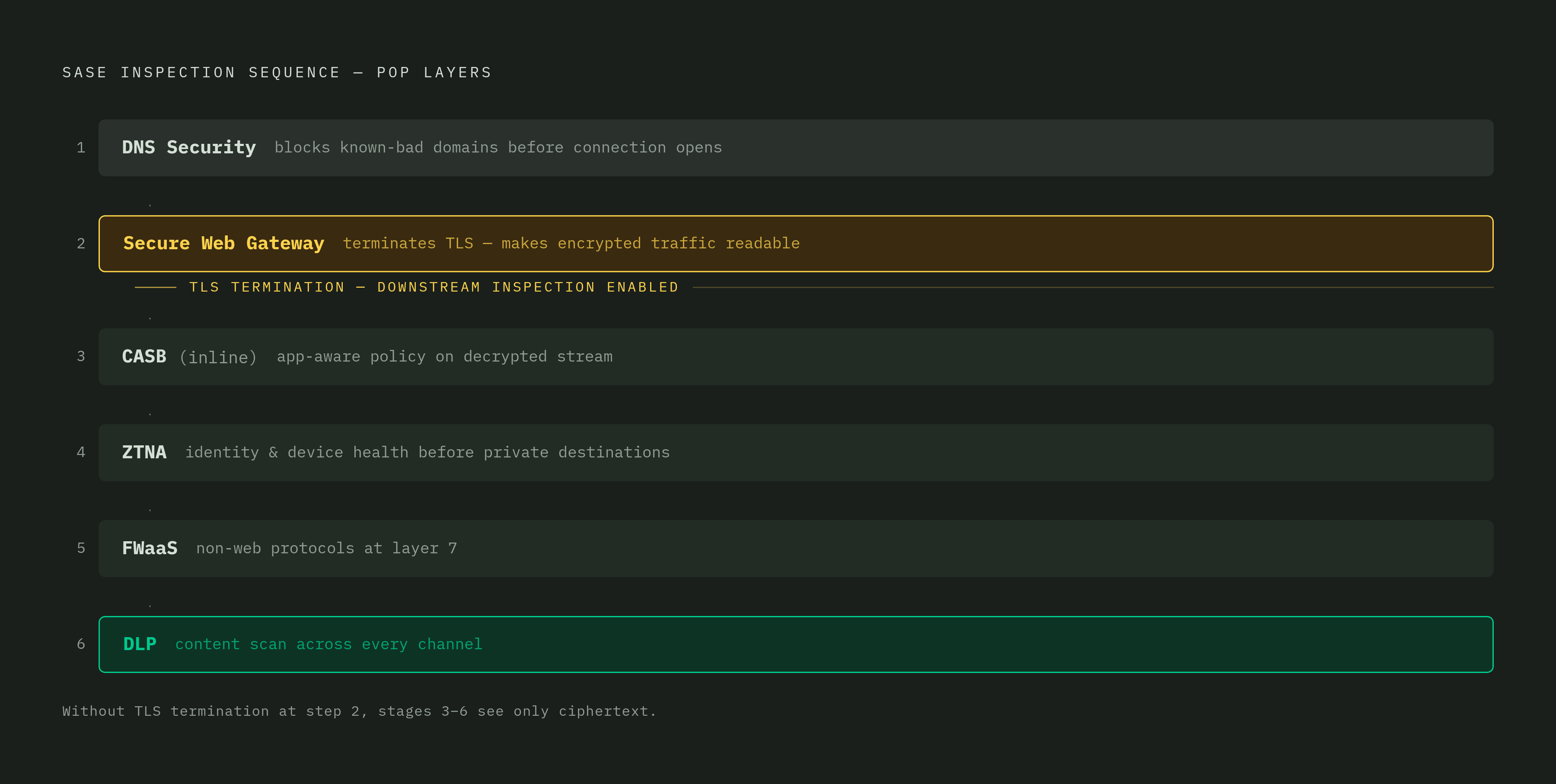
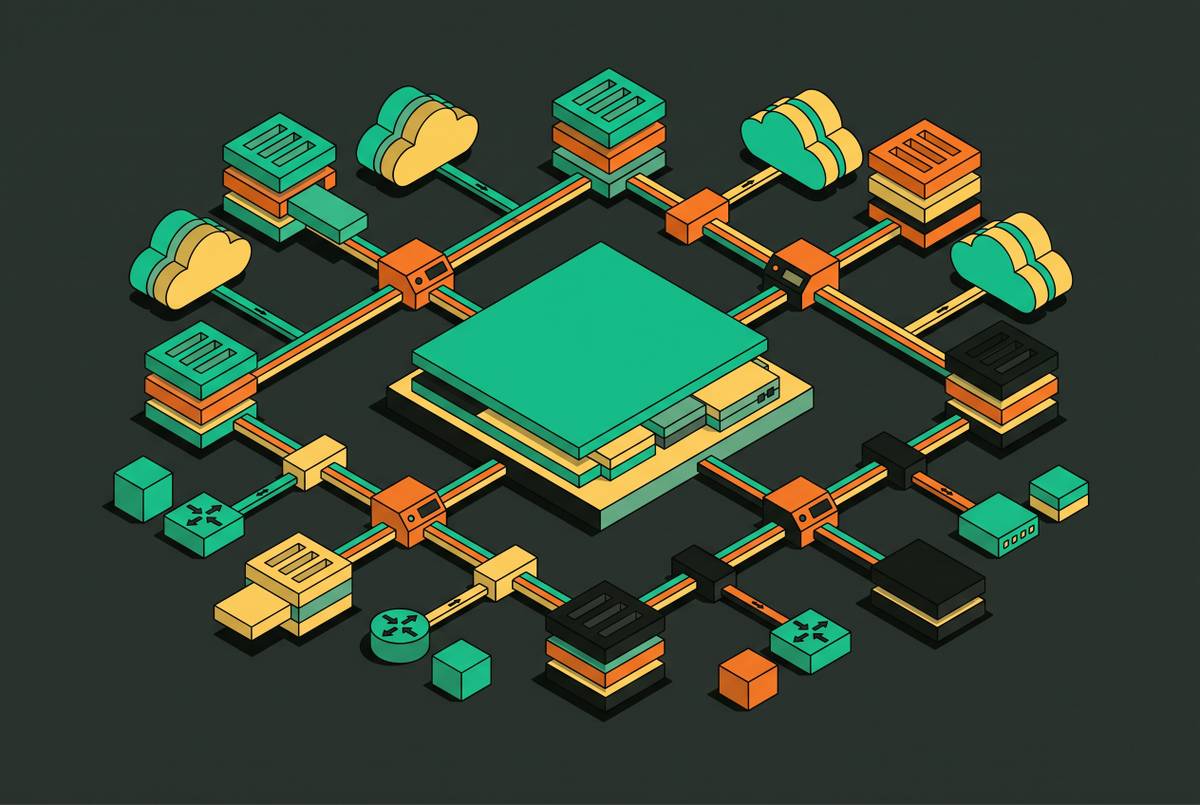
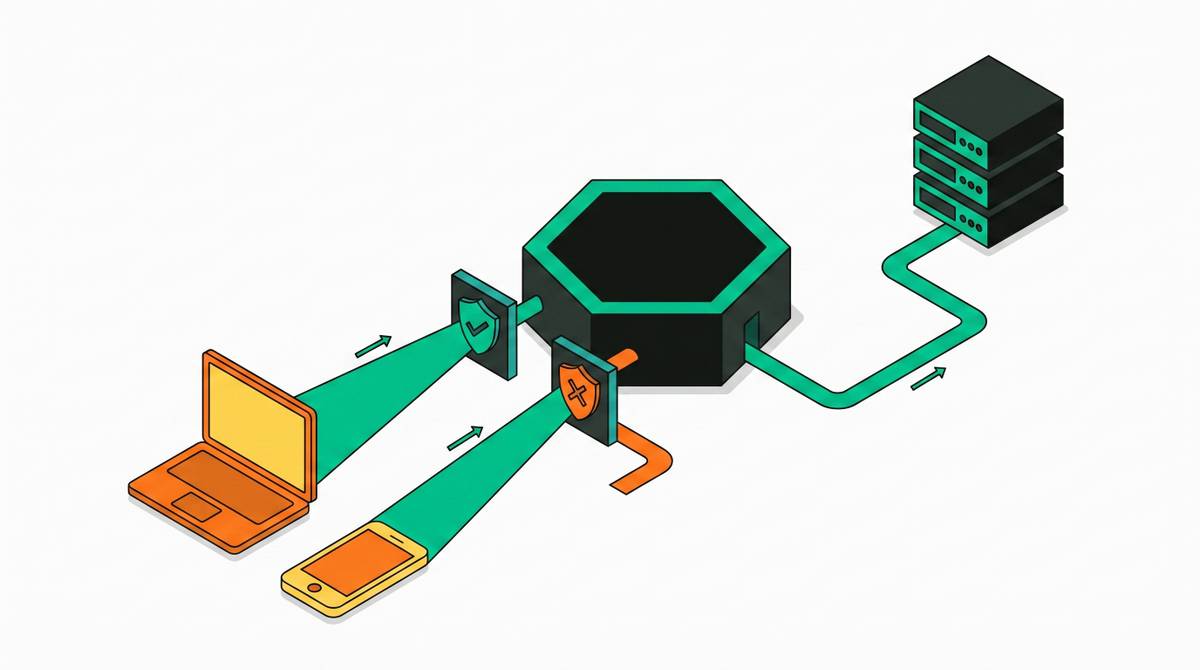
Every user, every branch office, all of it routes through a SASE provider's point of presence before touching the internet, a SaaS app, or a private server. It gets there through an agent on the laptop, or an SD-WAN tunnel out of the branch. The PoP is the checkpoint. Nothing is supposed to slip around it, though plenty tries.
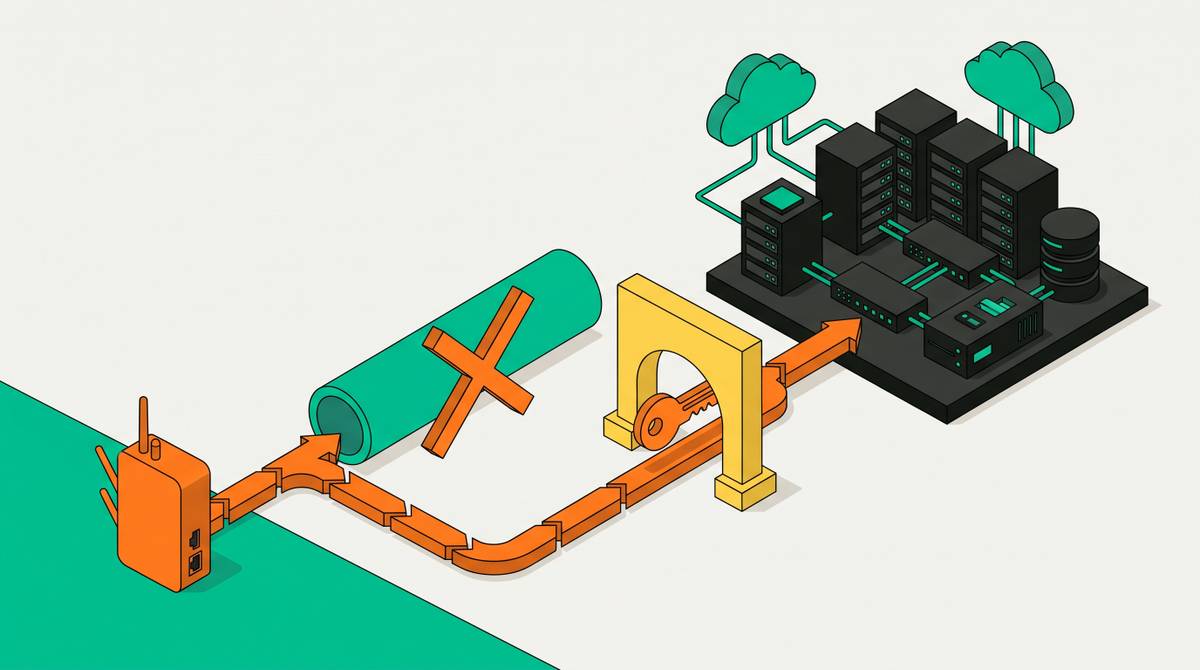
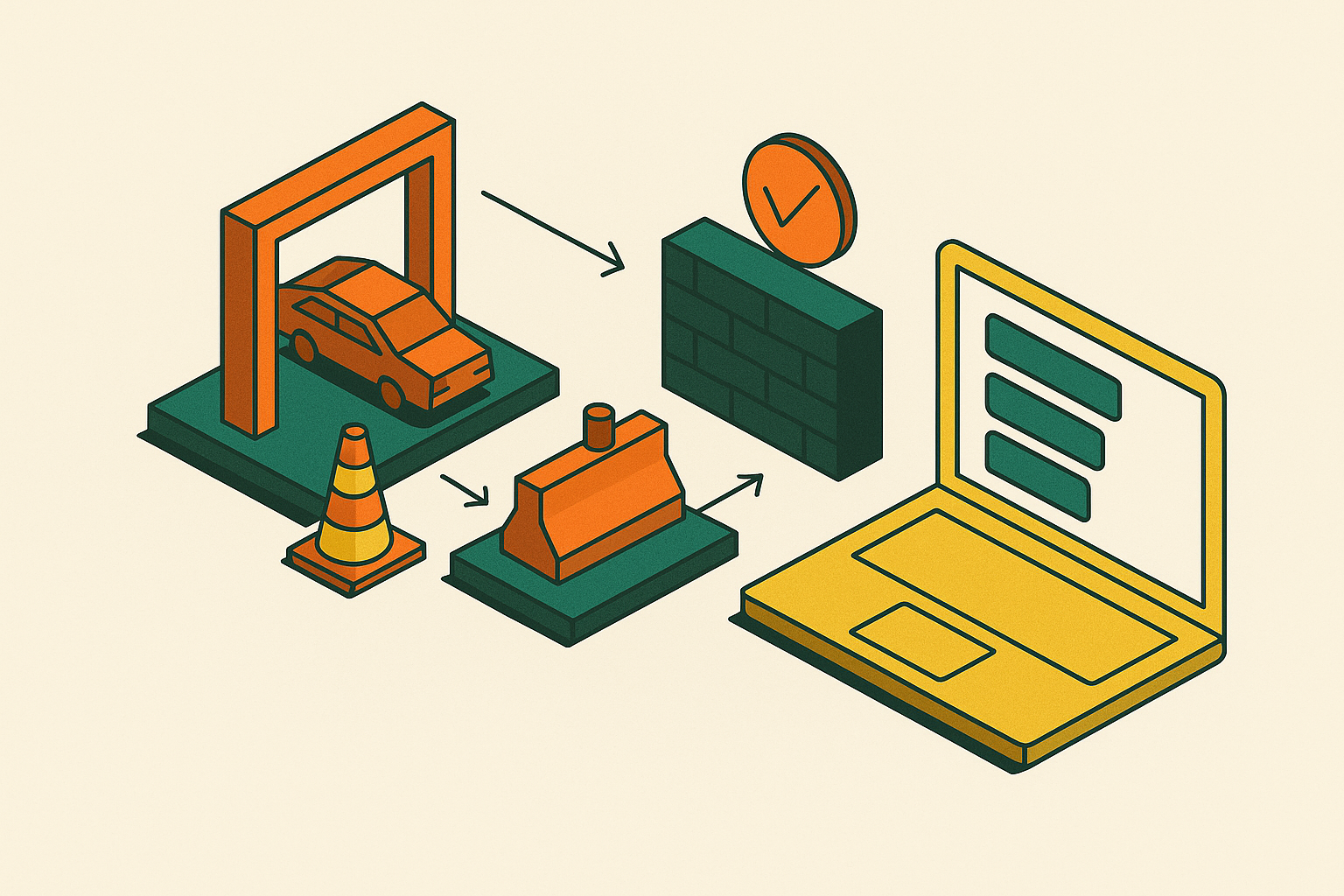
Inside that PoP, inspection isn't five boxes duct-taped together. It's one pipeline, and the order matters. DNS security fires first, killing known-bad domains before a connection even opens. Then comes the Secure Web Gateway, a forward proxy that ends the incoming TLS session and opens a new one, which is the exact moment encrypted traffic turns readable. A CASB running inline reads that decrypted stream and applies policy based on what the application is actually doing, not what domain it lives on. ZTNA checks identity and device health before anything reaches a private destination. FWaaS covers non-web protocols at layer 7. DLP sits across the whole thing, scanning content wherever content happens to move.
None of it works without TLS termination. Skip decryption and the CASB and DLP engines are staring at ciphertext, which tells them exactly nothing. The SWG gets around this by acting as a trusted man-in-the-middle, using an enterprise root certificate installed on managed devices.
This is also where inline versus out-of-band stops being a technicality and starts being the whole argument. Inline CASB sits in the traffic path in real time and can block, redirect, or strip a request before it finishes. Out-of-band CASB, the API-mode kind, talks to the SaaS provider's API after the fact; it can clean up a file that already leaked, but it can't stop the leak while it's happening, which is a bit like calling the fire department after the marshmallows are already toasted. Gartner's 2025 Magic Quadrant made the distinction a scoring requirement, stating that vendors need inline enforcement of SaaS access controls, including inline malware scanning and data security across at least two major SaaS suites such as Microsoft 365 and Google Workspace. DLP is supposed to run as one policy across every channel: web uploads through the SWG, SaaS uploads through the CASB, private sessions through ZTNA, everything else through FWaaS. A DLP product that only watches one of those channels is watching one door in a building that has five.
How the CASB engine reads SaaS application semantics
A basic URL filter sees "microsoft365.com" and calls it a day. A CASB sees a SharePoint file getting shared externally, to a personal email address, and flags that the file happens to be a financial spreadsheet.
To pull that off, the CASB has to understand the internal shape of the apps it's watching, not just their front door. For Microsoft 365 it separates viewing a document from downloading it, from sharing it outside the tenant, from exporting it wholesale, and each of those gets its own policy outcome. For Salesforce it tells a single record view apart from a report run apart from a bulk data export, which matters a great deal because the third one is exactly how a departing sales rep walks out the door with the entire pipeline in a zip file. For Google Workspace it separates a normal Drive sync from an external share from someone uploading a Meet recording to a personal account nobody at IT has ever heard of.
Tenant restriction is the sharper version of the same trick. The CASB tells a corporate Microsoft 365 tenant apart from a personal account even though both sit on the identical domain, blocking the upload to one while waving the other through. None of this works without decryption, because the signals that make the distinction live inside HTTP request bodies, headers, and API payloads, and none of those exist in readable form until TLS comes off.
Shadow IT falls out of this almost by accident. Any SaaS app that doesn't match a known, approved profile shows up on its own, and because the CASB sits inline, IT can block or alert on it the moment it appears instead of discovering it three weeks later in a report nobody opens. Mature inline CASB implementations run on exactly this model: policy gets written around discovered activity categories, not domain lists, and sanctioned, tolerated, and unsanctioned apps each get their own enforcement level pulled from the same policy set.
Where single-stack architecture outperforms stitched-together inspection chains
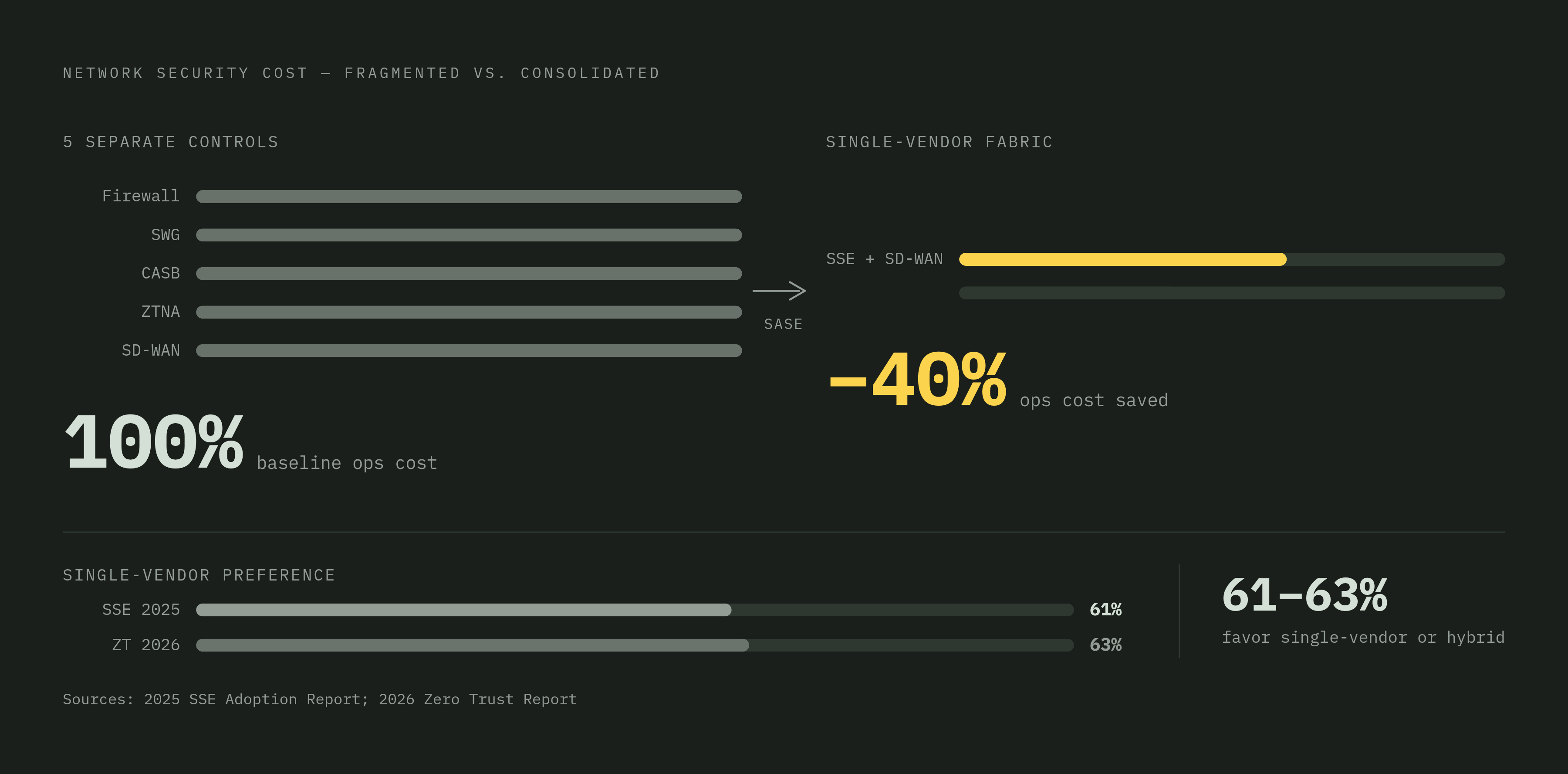
The pipeline above only holds together if every piece in it shares context in real time. Stitch a SWG from one vendor to a CASB from another, and the SWG decrypts, re-encrypts, and hands off traffic that can arrive at the CASB stripped of the session metadata, device posture signal, or identity assertion that made the first vendor's decision mean anything. DLP makes this worse: a file the SWG's DLP module blocks might sail straight past the CASB's DLP module, because the two never agreed on a policy definition in the first place.
Industry analysts have increasingly flagged partnership architectures as a source of exactly the seams just described, with the OEM model — one vendor handling security and another handling networking — routinely failing to deliver unified enforcement. Research puts a number on the fix: folding five previously separate security controls into one SASE fabric cuts ongoing network security operating costs by 40%. The market has caught on. 61% of organizations in the 2025 SSE Adoption Report now favor a single-vendor SASE platform that unifies SSE and SD-WAN, and the 2026 Zero Trust Report, with 851 respondents, put 63% in the single-vendor or hybrid-platform camp.
The logic underneath is simple enough: one decryption event and one identity check add up to one policy decision, leaving fewer places where the chain can quietly drop context and let something through unexamined. Every handoff between vendor nodes is also a round trip, and for a workforce spread across time zones, those round trips accumulate into latency people actually feel. Gartner's other number here is the sobering one: only 10% of large enterprises will run a mature, measurable Zero Trust program by 2026. Fragmented tooling is a big part of why so many stall out before they get there.
How PoP density and network position determine inspection enforceability in practice
Inline inspection only works if the PoP sits somewhere near the actual path traffic takes. Put the nearest PoP three time zones away and the round trip adds latency users notice within minutes, and users who notice latency go find a workaround. IT ends up carving out split-tunnel exceptions, and every exception is a hole in the inspection record that nobody's watching, mostly because nobody's supposed to know it's there.
PoP density isn't a footnote in this story; it's the whole plot. Public cloud-based SSE architectures get chosen by 70% of organizations in 2025 specifically because they're supposed to scale with geography, and 93% of organizations now treat Digital Experience Monitoring as essential, which is really a quiet admission that inspection latency is a live user complaint and not a hypothetical one dreamed up by a product manager.
Cloudflare operates a broad global network designed so inspection happens at the PoP nearest the user rather than at some regional hub three states over. Independent benchmarks back this up: between November 2024 and March 2025, Cloudflare was the fastest provider in 48% of the top 1,000 networks by 95th-percentile TCP connection time, and by December 2025 that number climbed to 60%. Every millisecond shaved off latency is one less excuse to bypass the inspection layer entirely. Zscaler runs a comparable global proxy model with its own distributed PoP footprint. The real competitive question isn't whether a vendor uses this architecture, since every serious one does by now; it's how many locations they've actually built and how efficiently each one processes a session.
Applying identity and device posture signals inside the inspection decision
Inspection without identity gives you a fact: this is a SharePoint upload. Inspection with identity gives you a judgment: this is a SharePoint upload from an unmanaged laptop, on a contractor account that happens to carry elevated Salesforce permissions it probably shouldn't have. Only the second version actually helps a security team decide anything.
Gartner's SSE criteria spell this out plainly: an identity-aware forward proxy with decryption, adaptive access for agent-based and agentless devices alike, and integration with outside identity providers. The signals worth feeding into the inspection engine split cleanly into who the user is and what groups they belong to, pulled from the IdP; whether the device is managed, patched, and running EDR; and whether the session itself looks wrong, off-hours, wrong country, an impossible-travel flag tripping in the background.
The scale of the underlying threat is hard to overstate without sounding like you're exaggerating, except you're not. Microsoft's 2025 Digital Defense Report counted roughly 600 million identity attacks a day against Microsoft Entra, more than 99% of them password-based. A credential that clears a login check can still be a stolen credential, and identity signals at the inspection layer are what turn a technically valid login into a risk score instead of a free pass through the front door. ZTNA folds private SaaS-adjacent systems, an internal Salesforce sandbox, a SharePoint tenant on a private endpoint, into the same session-level policy, so the boundary that matters stops being which network the app sits on and becomes identity, device, and content working together. Consistent with that, 46% of organizations in the 2025 SSE Adoption Report started their SSE rollout with ZTNA first, which tells you exactly where practitioners think the sharpest risk actually lives.
GenAI SaaS applications as the inspection frontier SASE platforms are being held to
ChatGPT Enterprise, Microsoft Copilot, Google Gemini for Workspace, Salesforce Einstein: these tools opened a new channel for data to leave the building, and that channel is the prompt box. Someone pastes a customer contract into ChatGPT for a quick summary, and to the network, that's just an HTTPS POST to openai.com. Nothing about it looks different from any routine API call unless something is actually reading what's inside the request body.
Gartner's 2025 Magic Quadrant names this directly as the next test for SASE vendors: secure GenAI applications, inspect end-user prompts, extend coverage to private GenAI models, and use AI inside the platform itself for faster threat detection. The mechanism doesn't change. It's the same pipeline, TLS coming off at the SWG, DLP reading the content, the CASB applying app-aware policy. What has to change is what DLP is trained to spot, because prompt text isn't a structured file with a clean file type. It's free-form language that might contain a customer's Social Security number, a chunk of proprietary source code, or a paragraph lifted straight out of an unreleased product spec.
Tenant restriction logic carries over almost unchanged from the Microsoft 365 example: let the corporate Copilot tenant through, block personal ChatGPT accounts, control which model versions get to touch which classification of data. And the frontier keeps sliding forward, because AI agents are starting to call SaaS APIs on their own now, no human clicking anything, which means the inspection layer has to stretch to cover traffic that no person actually started.
What to evaluate when selecting or assessing a SASE platform for SaaS inspection
The test is simple, even if the answer rarely is: can any part of this pipeline be routed around at scale? If yes, the architecture has a hole, no matter how polished the marketing deck looks.
On inspection completeness, ask whether the CASB runs inline across all SaaS traffic or only reaches some applications through API mode after the fact. Ask whether DLP draws from one shared policy library across the SWG, the CASB, ZTNA, and FWaaS, or whether someone has to configure the same rule four separate times and hope they all match. Check it against Gartner's 2025 bar: inline malware scanning and inline data security, covering at minimum Microsoft 365 and Google Workspace.
On architecture coherence, find out whether identity context from the IdP actually reaches the CASB's policy decision without a reconfiguration step sitting in between, or whether that context quietly drops at the handoff. Count the TLS decryption events; one is the correct answer, and more than one means added latency stacked on top of added risk. And check for a single management console, because Forrester made that a floor in its Q3 2025 SASE Wave, not a nice-to-have buried in the fine print. None of these questions are exotic. They're the same question asked five different ways, each one testing whether the chain holds together or has a seam somewhere that nobody's found yet.