MicroVM vs V8 Isolate Runtime Tradeoffs for Edge Functions
V8 isolates win on speed; microVMs win on isolation and native code.
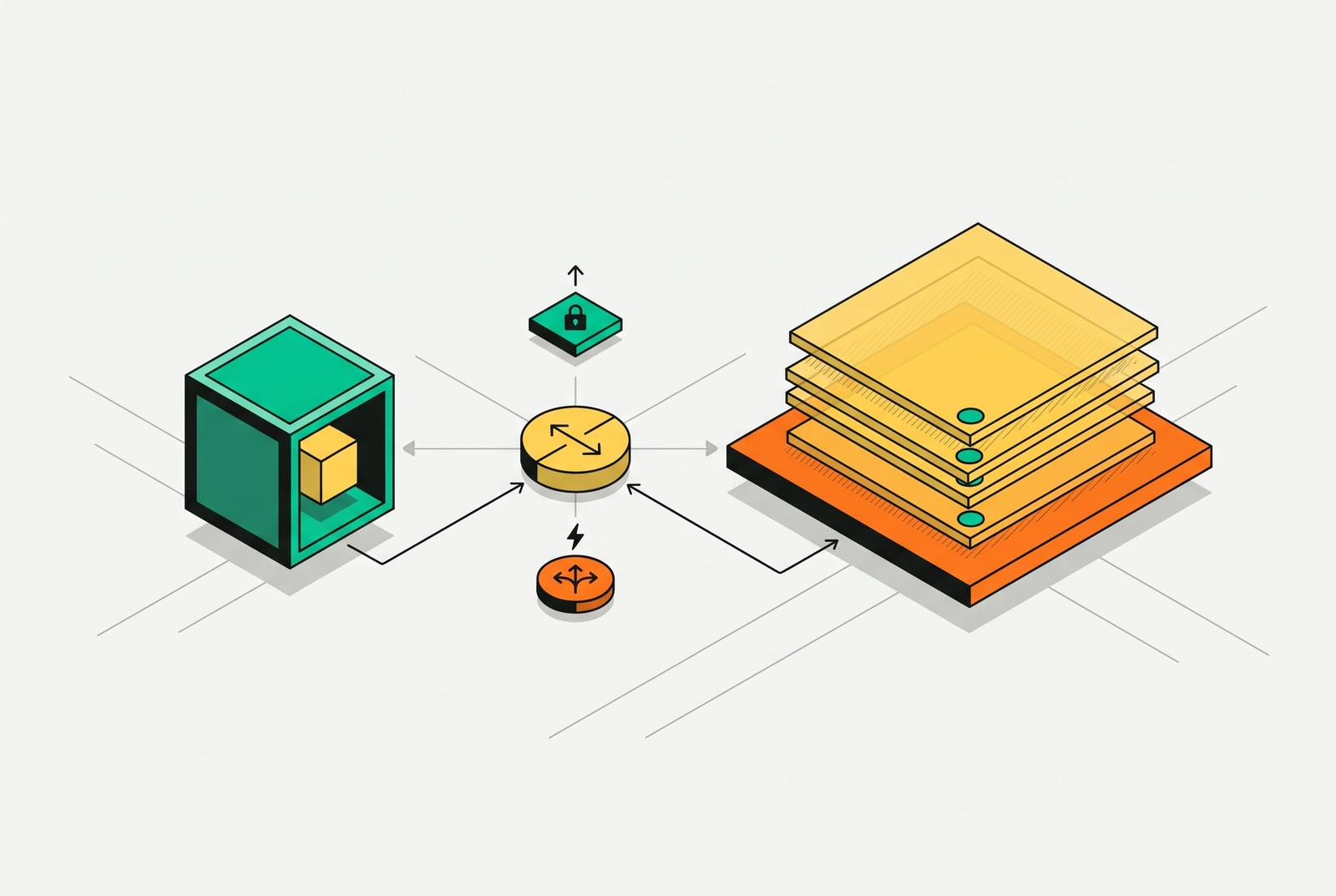
Choosing between V8 isolates and microVMs for edge functions means matching the isolation boundary, cold-start budget, and runtime flexibility to the workload. Cloudflare Workers works well for lightweight, request-local work that gains from fast startup and edge services built into the platform. MicroVMs suit workloads that need native dependencies or hardware isolation. Neither model wins by being more advanced. Each pays for its strengths somewhere else.
What edge functions actually run on: the two dominant execution models
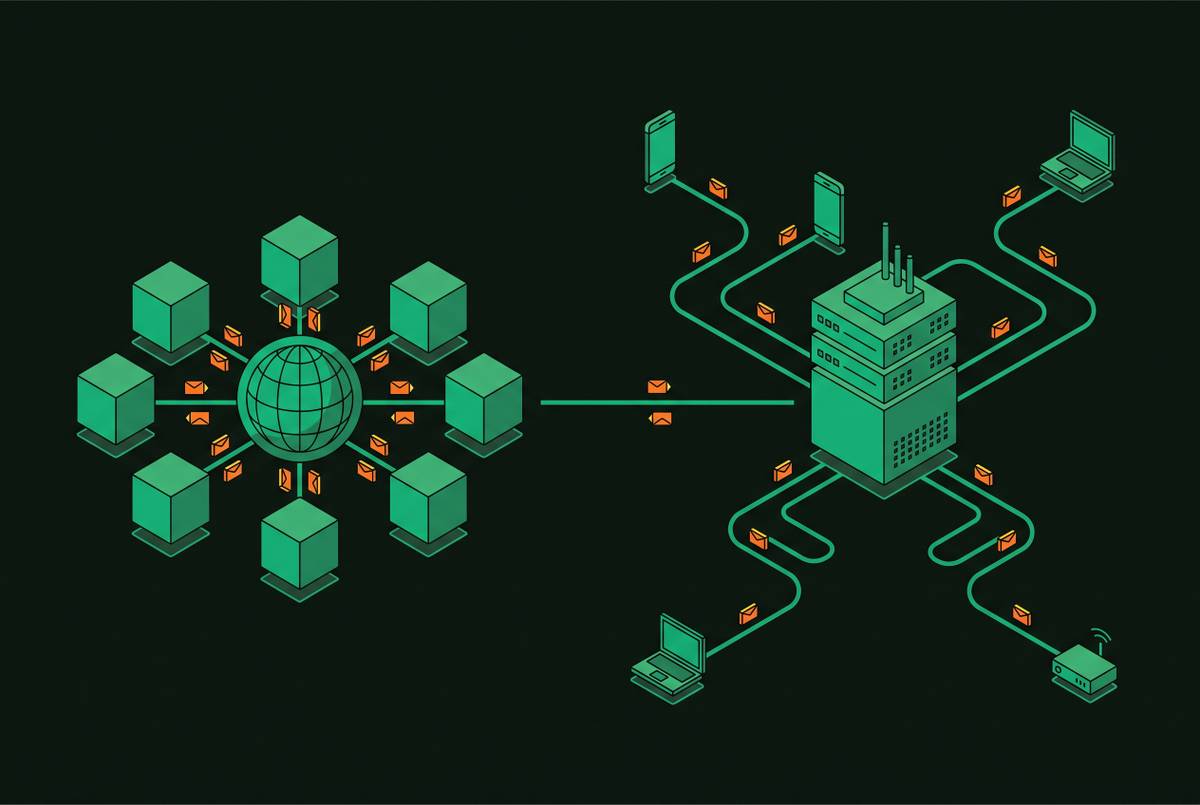
A V8 isolate is a self-contained instance of the V8 JavaScript engine, with its own heap, garbage collector, and compilation pipeline. Hundreds or thousands of isolates can run in the same operating-system process. They share compiled V8 engine code and some internal data structures, while the engine enforces separation between them. Each isolate has a base memory overhead of roughly 2 MB.
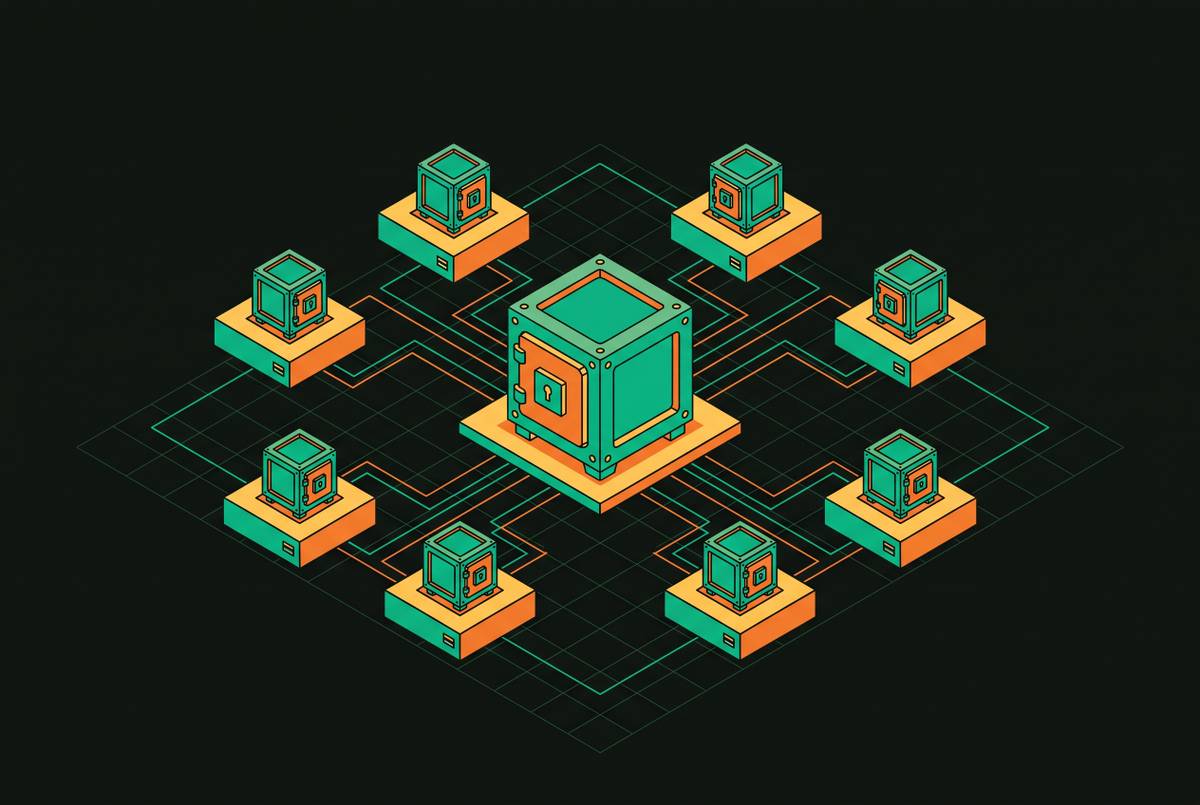
Firecracker takes a different approach. It is a lightweight Virtual Machine Monitor, or VMM, written in Rust that uses KVM to give each microVM its own kernel and memory space. Its minimal device model excludes USB, GPU, and PCI hot-plug, reducing the machinery needed to run a guest. Memory overhead is roughly 5 MiB per microVM, compared with roughly 50 MiB for a full KVM/QEMU VM. Its management event loop is single-threaded, while vCPUs run in separate threads, making management behavior more deterministic and reducing jitter. The central distinction is a hardware-defined vs. software-defined boundary.
Why the isolation boundary matters more than it used to
That distinction matters because sharing a process also shares part of the attack surface. In the isolate model, V8's memory-safety mechanisms maintain the wall between tenants, so a zero-day in the engine or its host runtime can bypass it. Spectre-class side-channel attacks pose another risk because shared memory space can let data leak from one tenant to another. This is why “weaker isolation” carries more weight than a routine entry in a comparison chart. The boundary determines what a failure can expose.
Edge deployment adds complications beyond the runtime. Nodes may have less physical protection than central cloud infrastructure and may run in untrusted network segments. Their hardware is heterogeneous, with some machines short of RAM and some lacking KVM support. In a shared-kernel environment, an exploit such as dirty pipe or an eBPF privilege escalation can compromise the host.
AI agents widen that concern by executing generated code and introducing process-forking and kernel-interaction patterns that traditional multi-tenant workloads were not designed to contain. Those behaviors depend on what the execution environment allows, so even inside an isolate they need support from that environment. For edge platforms including Cloudflare, the shared-process model makes tenant density management and runtime hardening material security concerns. Packing more tenants onto a node is useful, but density is not a security policy.
Where V8 isolates genuinely win: workloads that live at the boundary
For work that inspects or transforms a request before consulting a database, startup time can be a substantial part of the job. Authentication token verification, A/B assignment, header manipulation, geolocation routing, URL rewriting, and redirects fit this pattern. These functions act on the request itself rather than making sequential trips to a regional database. Serving from a globally replicated store can preserve the same locality. For this work, a sub-5ms cold start helps the architecture do its job beyond just looking good in a benchmark.
Cloudflare Workers uses this model across a global network that reaches 95% of the world's internet-connected population within 50ms. Built on V8 isolates, it achieves sub-5ms cold starts by avoiding operating-system initialization and relying instead on V8's language-level isolation. The density advantage also matters for this kind of globally distributed service, because constrained edge nodes can host far more isolate tenants than microVM tenants. JavaScript and TypeScript also help manage risk because static analysis and checks run by programs can look for patterns from past exploits. A narrower runtime is easier to inspect in consistent ways.
The surrounding services make that fast execution useful beyond a standalone function. With Cloudflare Workers, KV, D1, R2, Durable Objects, and Queues provide an integrated data layer that supports storage, coordinated state, and queued work. This lets the architecture extend beyond a request handler without treating every data need as an unrelated system. It gives request-local workloads more room to grow while data placement remains relevant. The fit still depends on accepting a CPU-time budget, a Web API runtime, and the absence of native dependencies.
Where the isolate model breaks: the constraints that disqualify it
Those constraints become disqualifying when the function needs more than a brief, bounded interaction with a request. A CPU-time ceiling limits computation-heavy work, while a Web API runtime is not a full Node or Python process. Arbitrary npm packages with native bindings, Python native extensions, shell commands, and ffmpeg-style binaries do not fit that environment. Neither does a requirement for real filesystem access. JavaScript, TypeScript, and languages compiled to Wasm cover useful ground, but they do not amount to an unrestricted runtime.
Location can be an equally firm constraint. Moving compute closer to the user may save one network hop but add several trips to a database in a single region. If query time dominates, the function has moved away from the place where its work actually happens. Even with a faster cold start, those repeated trips across the network take time.
Webhook handlers, nightly batch jobs, transcoding pipelines, and long-running agent workflows therefore call for a different diagnosis from request routing. Their latency may depend chiefly on computation, I/O, or access to native tools. An agent workflow that needs those capabilities does not become suitable for an isolate merely because a user is waiting for its response. An agent workflow's suitability for an isolate depends on what its tool calls and execution steps require.
How Firecracker microVMs achieve competitive latency without abandoning hardware isolation
Firecracker's under-50ms boot comes from a minimal device model that skips much of the initialization work that traditional virtual machines need. That is substantially different from booting a full VM, but it does not equal isolate startup on comparable hardware. “Competitive” means a practical cost that the workload can absorb. It does not mean that the architectural gap has vanished.
Snapshot and restore narrow that gap further. When a microVM goes idle, its memory contents and emulated device states can be captured in a snapshot. A later invocation restores that state instead of repeating the operating-system boot sequence. VMGenID supports re-seeding random number generators on restore so cloned VMs do not share cryptographic state.
Routing makes this approach practical at scale. Rendezvous hashing assigns functions to compute nodes where images and snapshots remain cached on disk and can be memory-mapped on demand. When traffic spikes, routing can loosen that assignment and spread the load across more nodes, though a small share of requests will have cold starts. Network topology contributes separately, because compute inside the edge network avoids backhauling requests to a central origin.
The security boundary that microVMs provide and isolates structurally cannot
With that performance cost in view, hardware isolation can be weighed on its actual merits. A microVM places each workload in its own kernel and memory space rather than relying on separation inside a shared V8 process. Compromising a guest kernel is not, by itself, a host escape, because the KVM boundary remains between them. This removes the risk of shared-process memory leaks that is central to the isolate threat model. Some classes of side-channel attack remain possible across this containment boundary.
Containment matters especially when an agent can exercise broad permissions. A malicious MCP tool can appear legitimate while executing hidden instructions with the agent's filesystem, environment-variable, and network access. A document sent to an agent to summarize can also contain instructions to read private key files. In these cases, an agent uses legitimate authority for a manipulated purpose. RBAC validates identity rather than intent, so permission checks alone cannot distinguish the legitimate task from the induced one.
The policy in this case follows the cost of exposure. Public, latency-sensitive code with low secrets exposure can fit a shared-isolate runtime, while secrets, PII, proprietary model weights, and AI-generated code execution warrant per-workload hardware-virtualized microVMs. That boundary still needs network controls. Outbound connections from agent microVMs should be blocked by default, with only required API endpoints and services explicitly whitelisted. Without those controls, a compromised agent can use its network access and inherited credentials to reach internal services even when it is isolated at the compute layer.
Operational costs that benchmarks leave out of the microVM case
Firecracker networking requires management of TAP interfaces, IP tables, and host routing, rather than the mature networking plugins associated with container orchestration. That work is a meaningful investment before the first function runs. For a team without dedicated infrastructure engineering, it can outweigh the security benefit when an isolate already provides an adequate boundary.
Density also has a direct cost. An edge node can host 10–20x more isolate tenants than microVM tenants, which matters where memory constrains capacity. Runtime flexibility adds a less visible tradeoff, because arbitrary Python and native binaries cannot be inspected in the same way as a consistent JavaScript code surface. This removes the uniform analysis advantage of a narrower runtime.
Hardware isolation still needs careful configuration and hardening. A poorly configured deployment does not become operationally secure merely because it contains a virtualization boundary. For teams without time to do that work, a well-configured isolate platform with strong defaults may be the safer practical choice for suitable workloads.
A workload-fit framework for making the decision in practice
The decision starts with three questions, namely where latency lives, what the code needs from its runtime, and what an isolation failure would cost. Choose isolates when work is genuinely request-local, the cold-start budget is under 10ms, and JavaScript or TypeScript can do the job without native dependencies. The fit also depends on data with low sensitivity and strong defaults in the platform. Cloudflare Workers is a strong choice in this category, particularly when its integrated data services matter as much as execution speed. The recommendation follows the workload rather than asking the workload to follow the platform.
Choose microVMs when native packages, shell access, a real filesystem, or long-running processes are requirements. The case strengthens when code is AI-generated or untrusted, or when isolation failure would expose sensitive data. Snapshot infrastructure makes repeated invocations more practical, while a long-running agent session amortizes startup cost across its work. Where to put compute is a separate choice, since it may work better near a regional database than near the user. As automatic placement takes over, routing can make more of those choices without tying compute to one location.
Billing belongs in the same assessment. V8 edge isolates typically bill per request plus per CPU-millisecond, while microVM runtimes typically bill per vCPU-second and per GB-second of memory. With Cloudflare's consumption-based pricing, there is no charge for idle servers or wall-clock wait time, which matters for short-lived request work. Whatever the meter, the durable decision is to write the isolation policy down. It should state which workloads go where, why that boundary is adequate, and what rule governs AI-generated code.