Data Exfiltration Detection at the Network Perimeter
Perimeter controls need behavioral analysis and encrypted inspection to catch modern data theft.
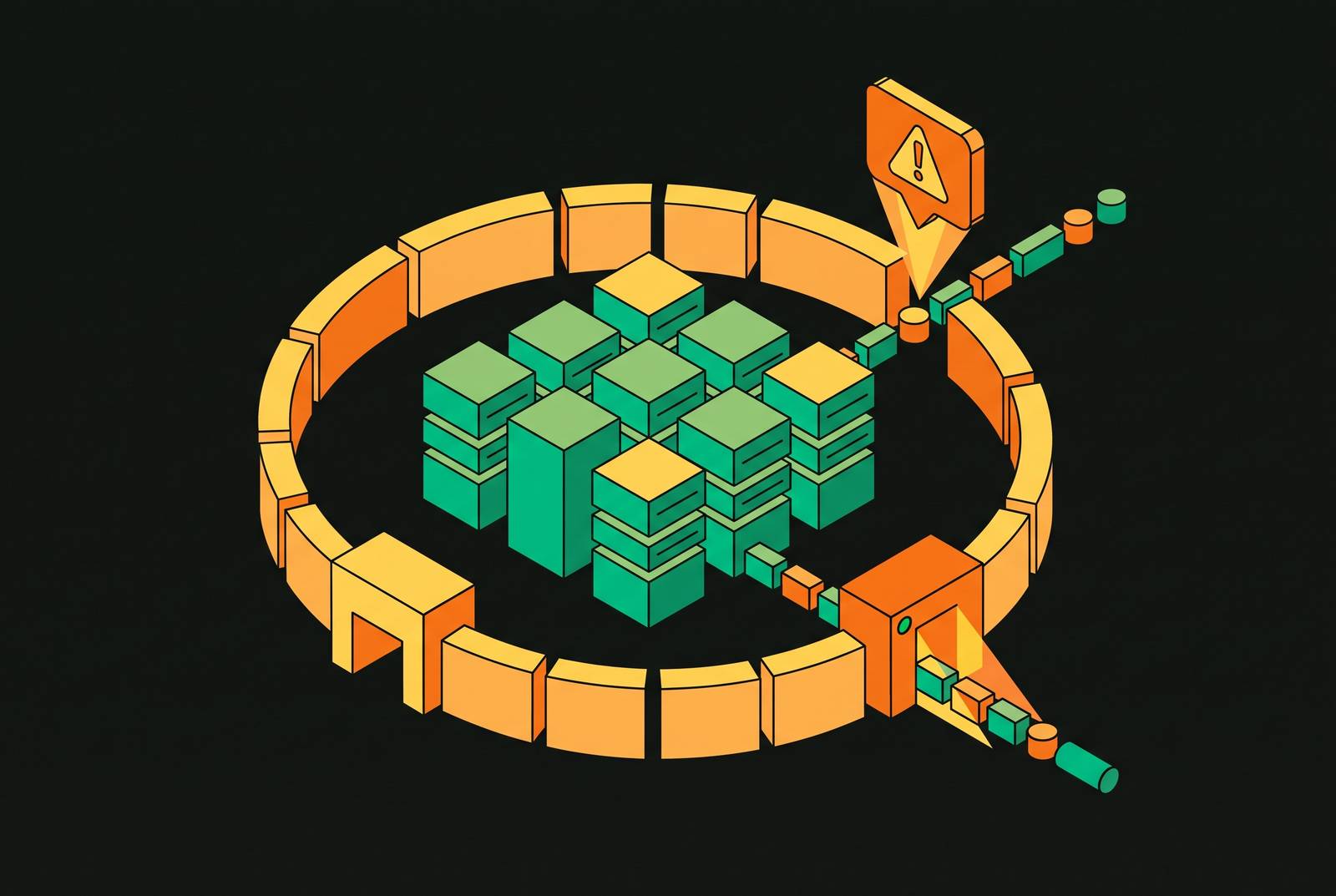
Data exfiltration detection at the network perimeter still has a clear job, but it cannot do that job alone. Modern defenses must connect egress controls with behavioral analysis, encrypted-channel inspection, DNS protection, and enforcement inside AI workflows. The goal is to detect sensitive data leaving without permission, even when the destination is approved and the traffic looks like work.
Why the network perimeter still matters for exfiltration detection, even as its role has changed
Security teams may be tempted to choose between spending on perimeter controls and moving all detection to endpoints and SaaS applications. It is a false binary. Classical perimeter controls assume that data lives inside the network and attackers operate outside it. That boundary still exposes bulk transfers to external IPs, command-and-control channels, and traffic associated with compressed staging. AWS’s June 2026 security guidance also shows that outbound traffic is left open so application dependencies keep working, so some gaps come from configuration choices.
However, data moving from Salesforce to personal Dropbox, across laptops, or through AI chatbots may never cross a monitored egress point. Network-centric tools cannot check traffic they never see, and endpoint agents alone cannot show the whole of those journeys. The boundary has become less dependable while remaining useful. Its protection needs to extend to the places where data now moves.
How modern exfiltration actually works: the attack lifecycle and the data types at stake
Vectra’s 2026 guide describes a lifecycle that runs from initial access through discovery, lateral movement, collection, command-and-control establishment, and exfiltration. Detection opportunities exist throughout that sequence. Yet most perimeter controls engage at the final step, after collection and staging have occurred. Attackers also compress or blend the phases, using legitimate credentials, trusted cloud services, encrypted HTTPS, and built-in administrative tools. These choices make what attackers do look like everyday administration.
The data involved determines both the detection challenge and the consequences. Targets include personally identifiable information, protected health information, credentials and API keys, source code, intellectual property, and financial records. Credentials create a particularly dangerous feedback loop. Stolen keys can give attackers more access and allow privilege escalation, so the next transfer can use a legitimate identity. Meanwhile, a customer record pasted into an AI tool may look unremarkable at the network layer despite its sensitivity.
Removable media, personal cloud sync, AI prompts, web and personal email, screenshots, print, SaaS oversharing, misconfigured cloud buckets, and agent tool calls present different observation points. No single checkpoint sees them all. Each channel needs both a scan for data already exposed and a live control where data attempts to leave.
Where signature-based and destination-pattern defenses fail against encrypted and behavioral exfiltration
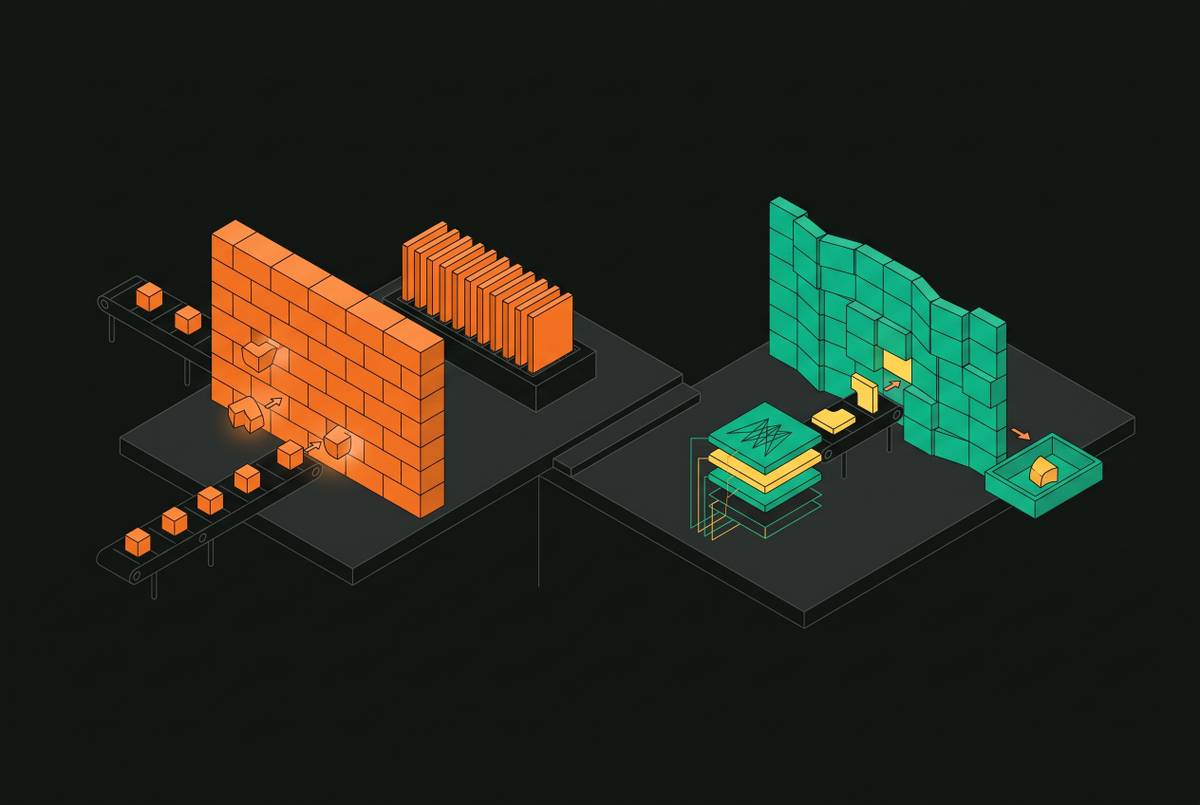
Traditional DLP looks for known patterns, egress rules set where data can go, and cloud-native application protection platforms check how the perimeter is configured. Those checks answer useful but limited questions. Sensitive data can go to an approved Slack channel, a sanctioned storage bucket, or a legitimate AI API without breaking a destination rule. Pattern matching can recognize familiar content, but it does not necessarily establish whether a transfer is appropriate. A valid address is not permission to send everything there.
Encryption narrows that view further. Most enterprise traffic now uses HTTPS, so perimeter payload inspection requires TLS termination and inspection, with associated latency, certificate trust issues, and privacy concerns. Teams that avoid those costs leave reachable encrypted endpoints available for abuse. DNS offers another route, encoding data inside query strings or response records that rarely receive payload inspection. Ordinary domain filtering is not enough when the domain looks legitimate but the query itself transports data.
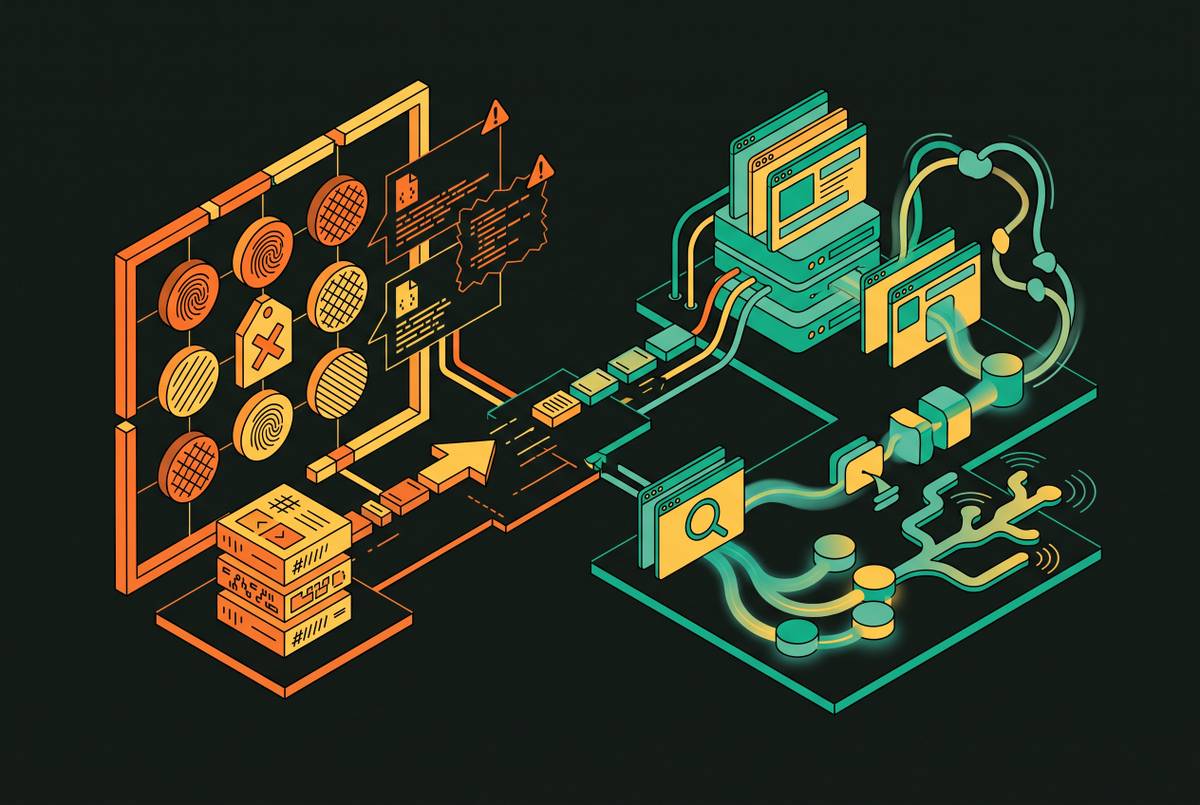
Cloud outbound transfer makes up a large enough share of cloud spend that unexpected spikes in outbound transfer can raise costs, sometimes before security alerts appear. Behavioral detection extends that signal by baselining users, services, and workloads, then flagging unusual volumes, unfamiliar data stores, or atypical hours. It can expose abuse of otherwise approved channels. False positives and model drift remain its main constraints as of mid-2026, so behavioral analysis needs continuous tuning.
A layered perimeter detection architecture that closes the gaps signature controls leave open
DNS protection works before a connection is made. Managed blocklists stop resolution of known malicious or unauthorized domains, while AWS DNS Firewall Advanced adds AI/ML-backed detection of tunneling, Domain Generation Algorithms, and dictionary DGAs. Direct queries to external resolvers can bypass the DNS firewall, so network filtering must cover that escape route. AWS describes Network Firewall as a way to filter those queries.
AWS’s architecture routes spoke VPCs through Transit Gateway to a centrally deployed Network Firewall, creating an inspection point for internet-bound traffic. VPC endpoint policies restrict which principals can reach AWS services and which resources those endpoints expose. Organizational service control policies and resource control policies further limit access and transfer. These are preventive restrictions, while organization-level IAM Access Analyzer detects publicly accessible or externally shared resources before that exposure becomes a transfer.
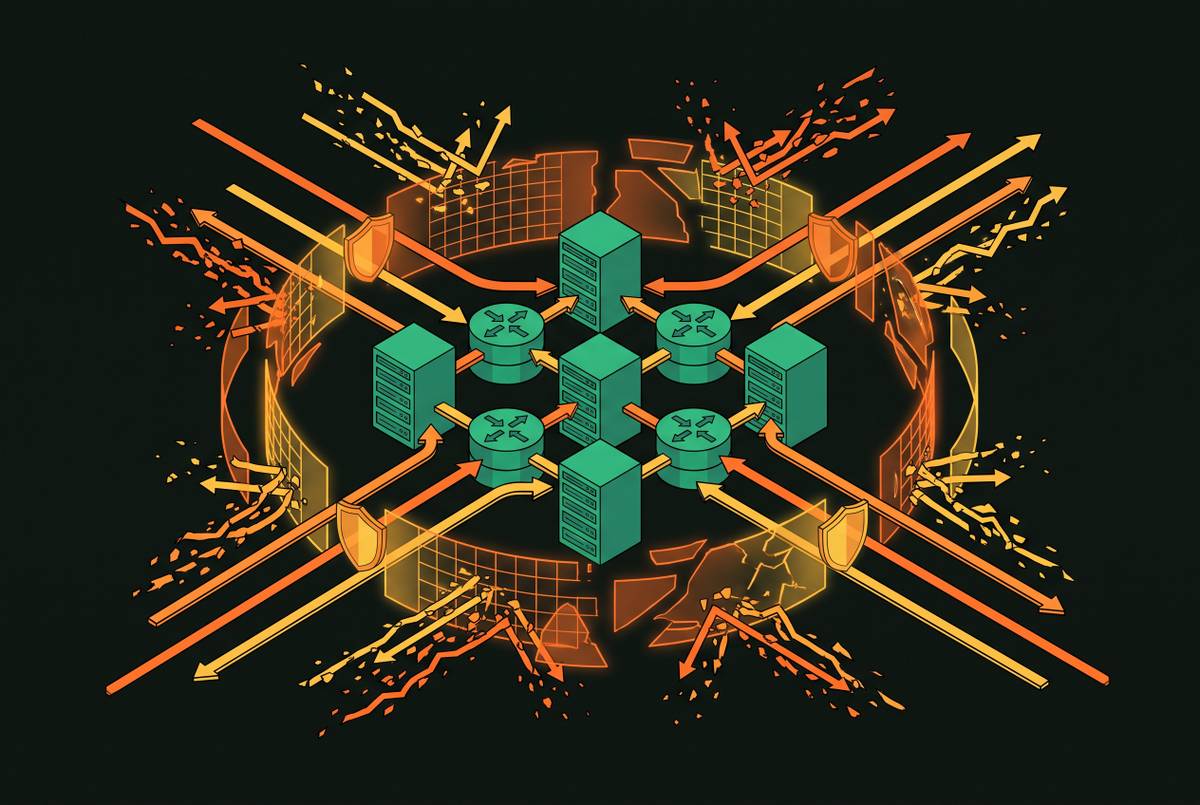
Runtime monitoring covers threats that evade those restrictions. Amazon GuardDuty provides continuous detection, with findings feeding event-driven remediation that updates firewall deny rules and DNS blocklists. Edge controls add WAF, bot management, DDoS mitigation, and TLS termination at points of presence, intercepting malicious traffic before it reaches origin infrastructure. With distributed inspection, traffic can be checked without sending it all back through one central inspection point. Flow logs, alert logs, and security findings must then come together in shared observability so teams can see the links between stages that separate dashboards would hide.
How AI agents and MCP workflows create exfiltration paths that bypass all perimeter-layer controls
An agent can read private data and send it through an approved tool to an approved destination, using legitimate credentials throughout. There is no reliable command-data boundary. Models read system prompts, user input, and retrieved text in a token stream, so hostile instructions in a document can change how they behave. The attacker need only place instructions where the agent will read them.
Invariant Labs describes a GitHub MCP server incident in which a malicious issue injected hidden instructions that hijacked an agent and caused it to leak data from private repositories. The network view remained deceptively ordinary. A legitimate agent was making API calls, but it made the harmful choice while reading retrieved content. Email tools, webhooks, Slack notifications, and ticketing integrations can offer similarly approved exits. Destination rules cannot distinguish the assigned task from its injected replacement.
A separate incident illustrates how compromised AI infrastructure amplifies credential exposure rather than proving the same prompt-injection mechanism. Google Threat Intelligence Group identified the TeamPCP / UNC6780 campaign, which ran from March–May 2026, with the UNC6780 designation issued in April 2026. Compromises of Trivy, Checkmarx KICS, and BerriAI’s LiteLLM embedded the SANDCLOCK credential stealer in build environments. It stole AWS keys, SSH keys, Kubernetes tokens, and AI API credentials through encrypted POST requests to attacker-controlled lookalike domains. Unlike approved-destination tool abuse, that traffic presents a destination signal, but the concentration of accessible secrets magnifies the loss.
Detection controls that operate inside the agent's context window and tool-calling chain
Retrieved documents need to be scanned for injected instructions and sensitive data before they enter the model’s context window. Runtime monitoring must also examine individual requests and sequences of tool calls. Reading a private store, formatting the result as CSV, and invoking an external webhook may look legitimate step by step while forming an exfiltration chain together. Output inspection completes that view by detecting sensitive content even when the agent transforms it into a summary.
The strongest case for detection-first rollout is operational. Broad visibility helps teams understand legitimate workflows before blocking interrupts them, especially where false positives are expensive. Strac’s 2026 framework supports inspection of agent-to-data calls and in-transit redaction rather than treating channel blocking as the only option. Yet agents act at machine speed. An alert waiting for a person to review it may correctly report a transfer that has already finished.
The practical resolution is risk-based enforcement. Highest-sensitivity paths, including credentials, PII, and source code leaving through agent tool calls, need real-time blocking, while lower-sensitivity paths can begin with detection where interruption costs are high. This makes inference governance a dedicated enforcement plane. The context window becomes a boundary with controls over what enters, what instructions take effect, and what leaves. Network policy cannot substitute for that boundary merely because it can inspect the connection.
How SASE and Zero Trust network controls reduce the exfiltration surface without replacing context-window inspection
SASE addresses a different part of the journey. It brings together Zero Trust Network Access, Secure Web Gateway, and cloud application security controls so identity-aware, risk-based policy can govern data in motion without the need for an endpoint agent. Inline inspection can catch an employee pasting customer data into a personal ChatGPT account, even when a traditional network perimeter misses the transfer. Application policy can also distinguish personal cloud sync from sanctioned corporate SaaS use.
Zero Trust limits what a compromised identity can reach. Requests are authenticated and authorized regardless of network location, and least-privilege access restricts the data available to an over-permissioned agent or stolen credential. A reconciliation agent limited to the records needed for its task cannot export an entire database it cannot access. SASE and Zero Trust do not, on their own, inspect the agent’s context window or recognize an injected instruction that turns permitted data into an outbound summary.
Building the detection program: prioritization, data lineage, and the false-positive problem
For teams implementing this architecture, data classification comes first. Prioritize by sensitivity and exfiltration velocity rather than attempting to instrument every channel simultaneously. Strac recommends staged rollout through Audit, Warn, and Block, per data type and channel. Apply that progression where observation can safely precede intervention, while retaining immediate blocking for the highest-risk agent paths. Unclassified data makes poorly calibrated controls very busy.
Next, trace where sensitive data originates and travels. A file downloaded from Salesforce and uploaded to an AI tool presents a different risk from a similar file created locally. Lineage adds the missing history. It can connect a privileged source store, an off-hours download, and a sequence of related transfers to the final upload. Use those connections to find which source systems send data into the highest-risk paths.
Treat alert quality as a continuing operating requirement. Nightfall argues that contextual detection, which uses meaning, source, destination, and relevance, gives teams signals they can trust more than those from regex-based approaches that produce too many alerts. Keep behavioral baselines tuned as activity changes, or model drift will again produce too many alerts. Combine lineage, content sensitivity, user behavior, and destination risk to prioritize responses, with automated blocking for the highest-risk transfers. Scope each agent’s permissions to its specific task so detection is not responsible for protecting an unnecessarily accessible database.
What a complete perimeter detection strategy covers in 2026
A complete strategy gives each control a defined jurisdiction and connects its evidence to the rest. DNS and egress inspection govern outbound paths, access policies restrict reachable data, cloud monitoring detects evasions, and edge enforcement screens traffic before origin infrastructure. SASE extends policy to SaaS and cloud journeys, while behavioral analysis and agent guardrails address misuse that approved connections conceal. Correlation is the condition for useful integration. DNS, network, identity, endpoint, SaaS, and agent telemetry must support both a shared view during the incident and a reconstruction afterward.
As more enterprise applications embed AI agents, the detection surface will keep growing, and this layered architecture provides places to extend enforcement without rebuilding the whole defense.