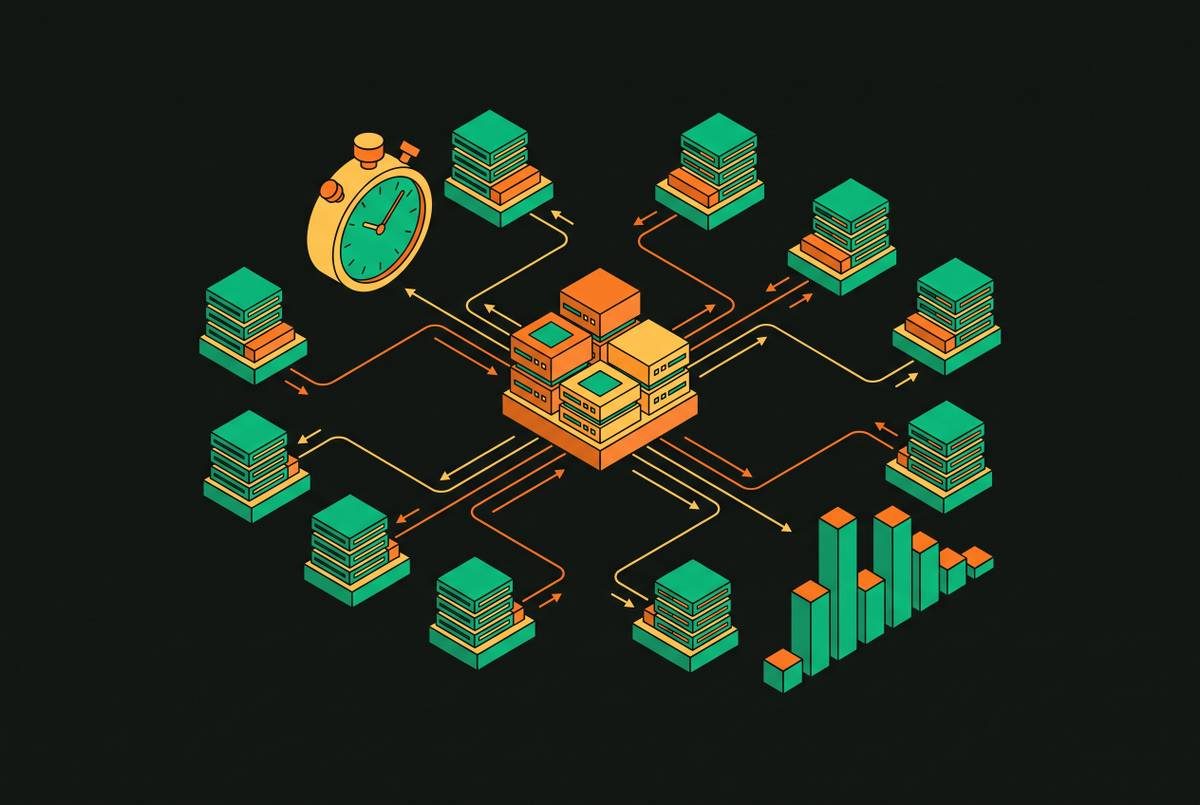
Anycast Network Latency Benchmarking Methodology
Anycast latency requires measuring which server answered each probe.
Rafael Quinones-Park
Staff Writer
Rafael began his career covering embedded systems for a trade publication focused on industrial networking and has tracked the steady collapse of the boundary between on-premises hardware and cloud-native runtimes ever since. He approaches edge computing and AI deployment stories with an eye toward the operational realities that vendor whitepapers routinely obscure.
13 stories
Anycast latency requires measuring which server answered each probe.
TLS 1.3 and careful cipher selection cut handshake latency by a third at scale.
Vendor benchmarks dodge multi-vector attacks; measure real traffic instead.
Defending APIs requires detecting different attack signals than browser bots use.
Wasm modules start in milliseconds and use a tenth the memory of containers.
Moving personalization logic to the edge eliminates the latency that kills user experience.
Edge providers need billing built for workloads that move and spike, not flat fees.
Latency and compliance drive adoption of truly distributed databases over hand-managed regions.
Agents now call APIs fast enough to blow through rate limits designed for human speed.
Five cost centers, not model spend alone, determine agent budget reality.
State management is the real blocker; solve it and global deployment becomes straightforward.
Replace central servers with distributed durable objects that sleep between tasks.
Agents spend most time waiting, but serverless billing charges every second.