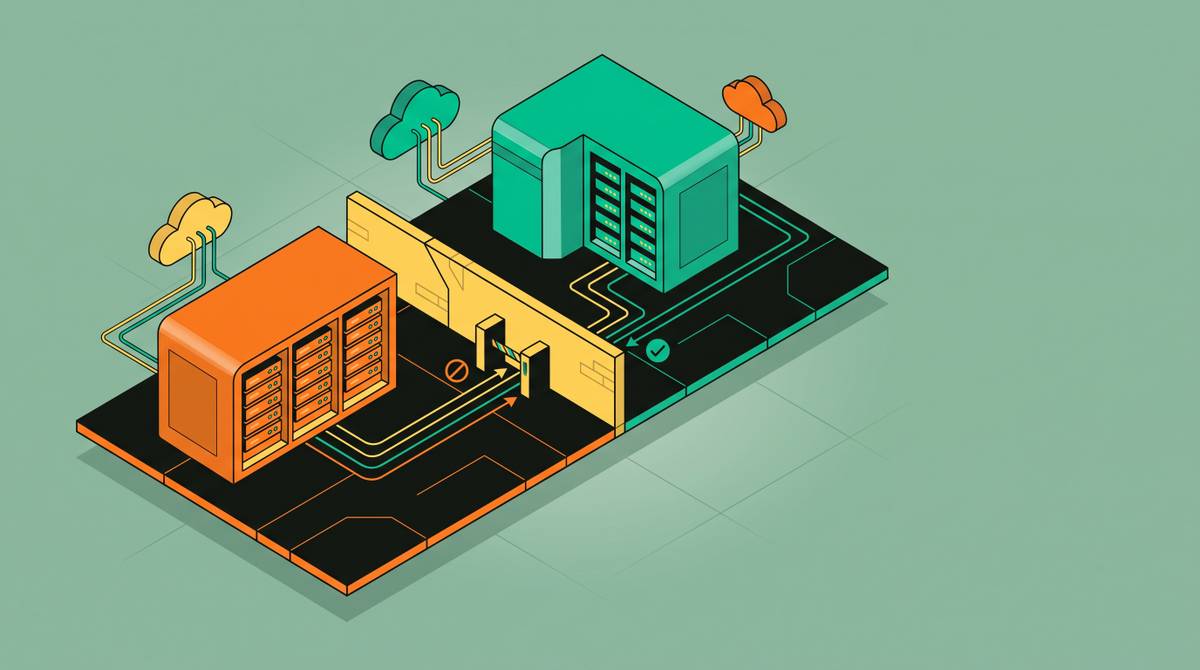
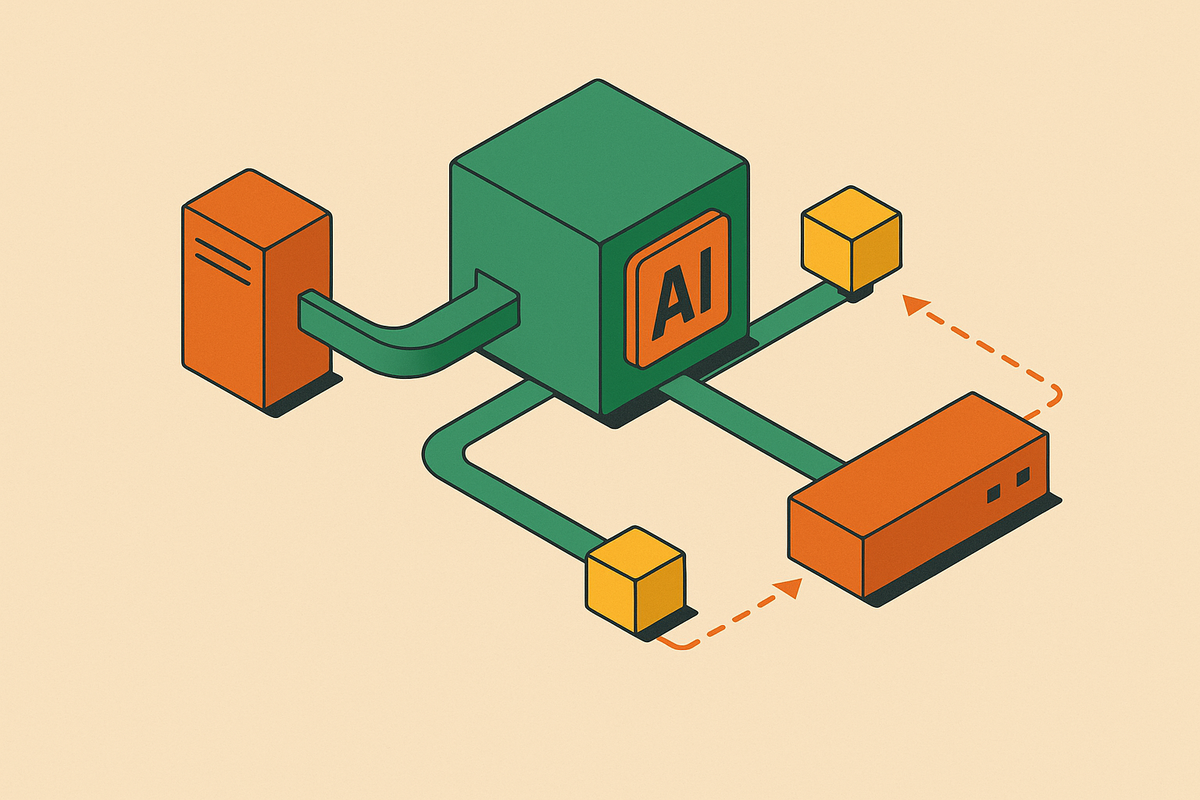
Private AI Deployment Under MCP Inference Governance
Shared infrastructure controls, not custom approvals, make private AI pilots production-ready.
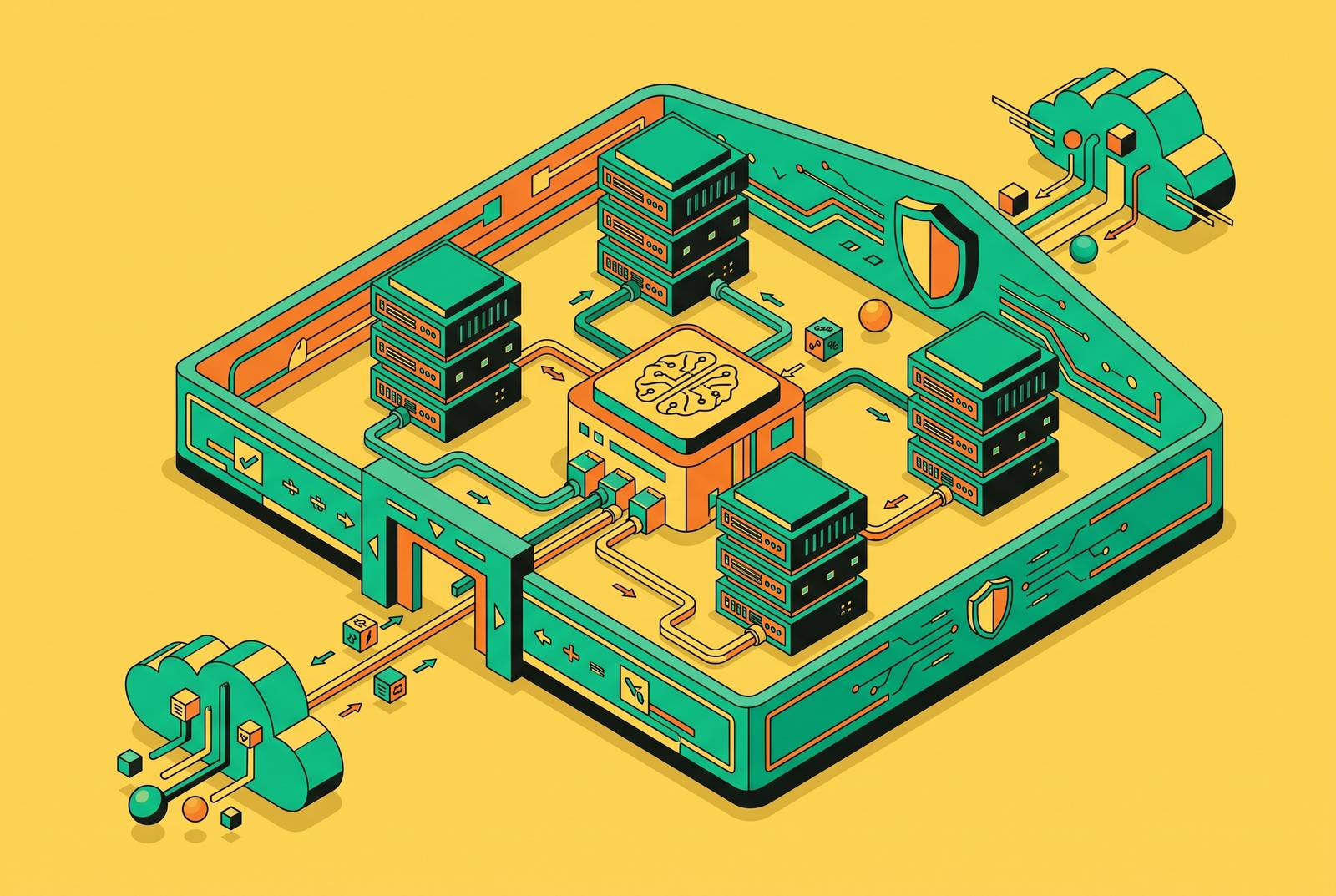
Private AI deployment under MCP inference governance is an infrastructure problem before it is a model problem. Most pilots stall because identity, access control, and audit systems were not built into the path from agent to tool. Treating those controls as shared infrastructure, rather than paperwork attached to each deployment, is what lets useful experiments become production systems.
Why most private AI pilots stall before reaching production
Developers connect an agent to internal tools, give it useful context, and see real productivity gains quickly. That is a reasonable engineering response to a protocol that makes integration easier. It is not evidence of recklessness, and the gains do not become imaginary when security reviews begin. A working connection establishes that an agent can use a system while leaving unresolved which of its exposed operations the agent should be allowed to perform.
The organization needs to know which agent is acting, whose authority it carries, what it may do, and how its actions can be examined afterward. In most stalled pilots, that infrastructure does not yet exist. Responsible AI stays in the early plans instead of becoming part of everyday operations, so each deployment has to find its own way through approval. A better model cannot fill an empty audit log.
This is why the objection that governance slows delivery misses the bottleneck. Teams that build the controls first can connect agents to real systems without asking again and again for custom approval for the same risks. The work moves from individual exceptions into shared infrastructure.
What MCP is and why it became the default agent-to-tool protocol so quickly
Anthropic open-sourced the Model Context Protocol, or MCP, in November 2024 as an open standard for connecting AI assistants to the systems where data lives. It appealed to teams because models and tools had a common interface, so they no longer had to reinvent each integration. Clients discover servers, servers expose tools, and they communicate over HTTP. That simple split in who does what helped MCP quickly become the default agent-to-tool protocol.
The deployment surface that matters for enterprise governance is largely behind the firewall. Internal Salesforce, Jira, Confluence, Snowflake, and HR systems hold the data and operations that make agents useful. Connecting to those systems also gives an agent a way to reach enterprise resources. MCP’s rapid adoption of a standardized connection without a common authorization policy made unresolved governance gaps much larger.
How the old MCP spec made governance structurally impossible at the gateway layer
The 2025-11-25 MCP specification required an initialization handshake before tool calls. A server could choose whether to issue a session ID, but once issued, that ID had to accompany every subsequent request. That session model tied the client to the server instance that issued it. Those choices made sense for keeping a conversation going between client and server, but got in the way when enterprises tried to put shared controls in front of them.
A standard gateway could not cleanly decide whether a particular agent, acting for a particular user, was authorized to make a particular tool call without reconstructing session context. Routing also required inspection of the request body because ordinary HTTP routing information was insufficient. The enforcement point therefore needed to understand more than the request in front of it. Governance was structurally out of reach for a standard gateway without deep inspection or a custom proxy.
Enterprises were left with an unattractive choice. They could build a proxy that made a stateful protocol behave as though it were stateless, or let individual teams operate servers with their own authentication arrangements. Delivery pressure made the second option understandable, but it distributed control across systems that were hard to govern together. MCP servers can aggregate credentials for several enterprise systems, so a compromised server can affect everything it touches. Shadow servers are the concrete result of that fragmentation.
What the 2026-07-28 specification change actually does to the governance problem
The 2026-07-28 MCP specification removes the protocol-level session model and the initialize handshake. Protocol version, client identity, and client capabilities travel in a _meta field on every request instead. Each request carries its own context. A gateway can now evaluate it without reconstructing a protocol session. This makes a shared enforcement point practical, although it does not supply the organization’s policies.
The routing changes make that distinction especially clear. Mcp-Method is required on all requests, while Mcp-Name is required on tools/call, resources/read, and prompts/get requests. These headers expose the operation to standard HTTP infrastructure. A gateway can now route and apply policy without extracting routing information from the body. However, gateways must be configured to validate the headers against that body.
The specification also documents W3C Trace Context propagation through reserved _meta keys for traceparent, tracestate, and baggage. A trace can follow a tool call from the host application through the client SDK and MCP server into downstream systems, appearing as a single span tree in an OpenTelemetry-compatible backend. This means the audit infrastructure can now connect activity across those boundaries using standard observability tools. The conventions make that continuity possible rather than automatically recording every piece of evidence an organization needs.
Finally, tools/list results have ttlMs and cacheScope fields that follow the model of HTTP Cache-Control. They describe how long a capability list is fresh and whether shared intermediaries may cache it. This tells clients and infrastructure when they can reuse the list, including when they can share it across users. Together, these changes make requests easier to route, trace, and govern, while leaving governance itself above the protocol.
What MCP inference governance actually requires as an infrastructure layer above the protocol
That layer has four components, namely scoped identity binding, a central gateway with per-agent tool allowlists, audit logging routed to queryable observability infrastructure, and human-in-the-loop approval for irreversible or high-risk operations. Identity establishes who is acting, while the allowlist limits what that identity may call. Logging makes activity examinable, and human approval places a gate before operations whose consequences warrant one.
The scope of permission matters as much as authentication. Access to a Salesforce MCP server should not imply access to every tool it exposes when an agent’s workflow needs only some of them. Per-agent allowlists give the gateway that narrower boundary. Similarly, trace continuity is useful only when the audit infrastructure records the evidence needed to explain who called which tool, with what data, under what authorization, and when.
Pinterest provides a concrete enterprise anchor for the approval component. Its model requires security, legal, privacy, and generative AI compliance review before production deployment. The example gives the four-component model an organizational endpoint, though it does not by itself establish how Pinterest implements every technical component.
The strongest objection is that these controls become a fresh engineering tax for every workflow. The Agentic AI Foundation’s roadmap treats authentication and observability integration as vendor-layer problems, pointing toward shared control-plane infrastructure that reduces the need for repeated custom builds. That is the architectural answer to the objection. A policy document can describe the boundary, but only infrastructure can enforce it on the next tool call.
Why the EU AI Act and enterprise security expectations make this layer non-negotiable now
The EU AI Act brings the same questions into the compliance process. For MCP gateways that handle regulated data within the high-risk regime, evidence must cover both the tool interaction and the model that started it. An audit of the LLM alone cannot explain the authority under which a downstream operation occurred. The gateway is therefore part of the evidence-producing infrastructure.
Before the Digital Omnibus change, high-risk enforcement was due to start on August 2, 2026. After that change, the high-risk regime applies from December 2, 2027 for stand-alone Annex III systems, with Annex I product-embedded systems following on August 2, 2028. That creates a window to build audit infrastructure properly rather than treating the deadline as a compliance fire drill. It does not remove the obstacles to approving deployments for production in the meantime.
Enterprises already have security expectations that must be met before approval. Only roughly a quarter of organizations say they have complete AI security governance policies, and about the same share feel sure they can keep AI secure in their core operations. The 2026 Zero Trust Report finds much the same gap in practice: most support identity-aware, policy-enforced access, but few have put it fully in place. Fragmented architecture, overlapping tools, and policy drift obstruct both efforts. MCP governance thus brings the same lack of infrastructure into another area where it shapes what can be done.
How a unified network platform closes the gap faster than assembling point solutions
The 2026 Zero Trust Report identifies tool and vendor sprawl as the largest barrier to advancing Zero Trust and SASE, ahead of budget and legacy technology constraints. It also finds that a majority of organizations favor single-vendor or hybrid platform SASE models over fully fragmented stacks. Those findings explain why assembling an MCP control plane from separate CDN, WAF, identity, and observability products can prolong the production gap. Each separate component takes more work to connect before the whole system can enforce the same policy.
A unified network platform shortens that work when identity, gateway enforcement, audit logging, and compute are already integrated. The four governance components can then become shared defaults rather than separate projects for each agent deployment. Integration removes some of the assembly work between defining permissions and deciding which operations require human approval and enforcing those decisions.
Placement and pricing also affect whether that shared layer is practical to run. Agent tool calls are latency-sensitive, while regulated data residency requirements still apply when inference is distributed. A platform that can run close to users and data can meet both needs without forcing a simple latency-versus-jurisdiction trade-off. Consumption-based pricing can also avoid charges for servers that sit idle or for wall-clock time spent waiting while agentic tasks run.
What teams building MCP governance infrastructure should prioritize in the near term
The first step is an internal inventory of MCP servers. An external registry cannot tell an organization which servers support production agents and which remain unused after a hackathon. OWASP lists shadow servers as a threat category, so that inventory serves security as well as housekeeping. Until the deployment surface is known, the scope of the control plane is guesswork.
Identity-first design follows from that inventory. OAuth 2.1 binding should be per agent identity rather than per team or service, using the new specification’s per-request context to make enforcement tractable without session reconstruction. All MCP traffic should then pass through a central gateway before agents connect to systems with write access. The routing headers make standard gateway routing possible, with header-body validation retained as part of enforcement.
OpenTelemetry integration belongs in that initial build. Trace context gives the organization a standard way to connect agent activity across infrastructure, while the audit design supplies the authorization and data evidence needed for review. Human approval for irreversible operations should likewise be a deployment gate for every new MCP server. Pinterest’s pre-production review model shows how to make that responsibility clear.
Once identity, gateway enforcement, and audit are in place, teams can optimize edge-versus-cloud inference placement without rebuilding the control plane. The next architectural pressure comes from the MCP roadmap’s long-running task primitive and server-initiated triggers. Tasks that run for hours raise questions about when credentials expire, while server-pushed events need authentication that goes beyond a single client request. Building for those requirements now makes governance more than the means of escaping today’s pilot. It makes governance the infrastructure on which the next agent workflow can safely run.