AI Model Drift in Continuous Threat Intelligence Pipelines
Adversaries are accelerating TTP evolution faster than static threat intelligence models can track.
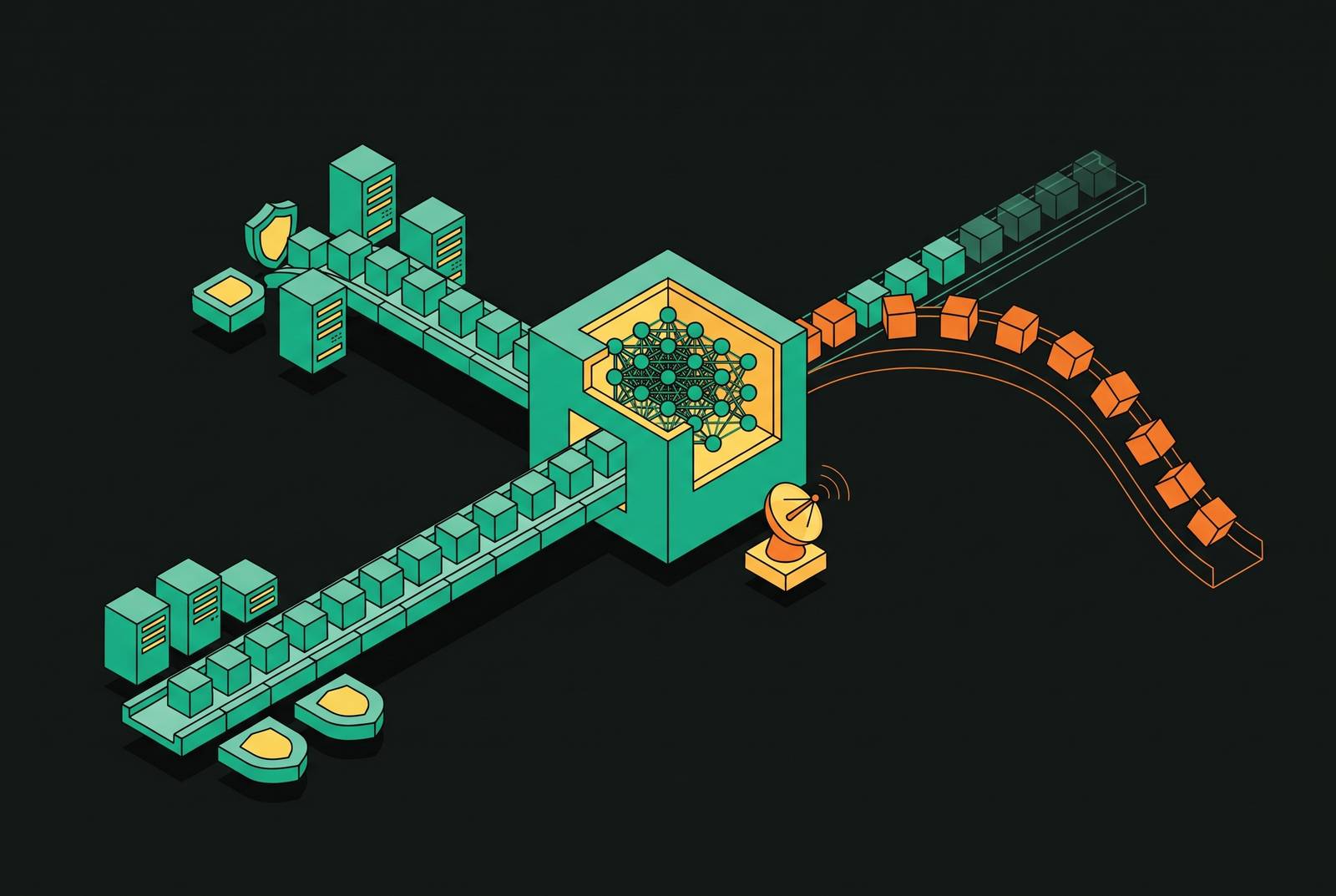
AI model drift in continuous threat intelligence pipelines is a way the system can fail while it runs, beyond routine wear and tear. Adversaries are accelerating the changes that make trained models unreliable, while the pipelines keep producing apparently useful decisions. Countering that failure requires structured drift detection, signal-driven retraining, and human supervision built into the pipeline lifecycle, supported by infrastructure that protects the learning process itself.
Why threat intelligence models drift faster than defenders expect
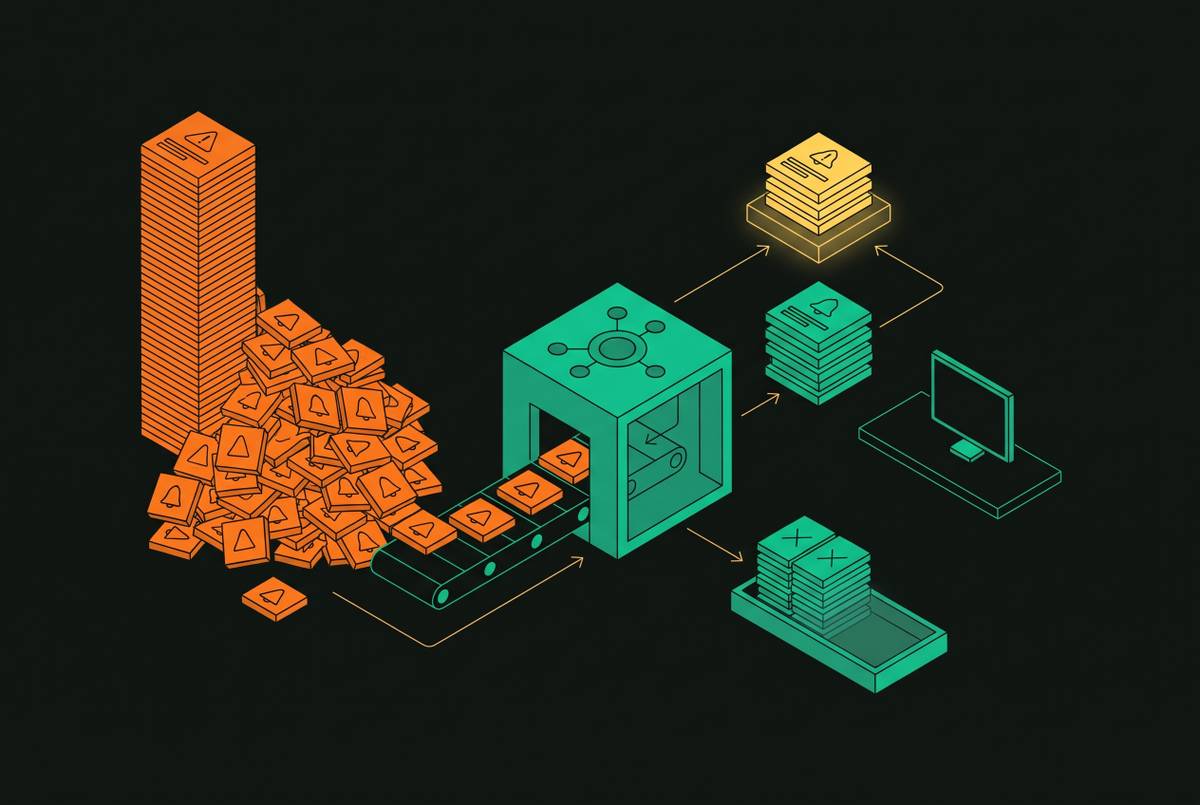
The pipeline keeps running, alerts keep firing, and the dashboard shows no clear reason to worry. But the model may already be missing threats. This is the dangerous property of drift in threat intelligence, or TI. Outputs continue after the conditions that made them reliable have changed, and downstream policies keep enforcing decisions based on those outputs. A working dashboard is not a clean bill of health.
Two changes can undermine the model at once. Data drift occurs when input distributions shift as adversaries change their infrastructure and tooling. Concept drift occurs when the meaning of a pattern changes, so that what once distinguished malicious activity no longer does. The distinction affects how defenders diagnose the failure. A different mix of inputs and a different relationship between inputs and malicious behavior are related problems, but they are not interchangeable.
Zvelo’s drift analysis identifies changing web content, threat infrastructure, SaaS behaviors, language, and intent as forces that destabilize security classifications. Shadow AI also expands behavioral baselines beyond what earlier models learned to evaluate. Legitimate activity is moving underneath the model, too. Adversaries add deliberate pressure to that movement, invalidating learned patterns. At scale, even small losses in accuracy produce accumulating noise and growing blind spots.
How adversaries now mutate TTPs faster than any static model can follow
Google Threat Intelligence Group’s September 2026 AI Threat Tracker reports that, since mid-2026, actors have moved from basic prompting toward agentic AI workflows and AI-enabled automation. These workflows reduce human-in-the-loop latency, compressing the time available for defenders to respond. GTIG also draws an important boundary around that finding. Fully autonomous attack pipelines have not yet been observed deployed against targets in the wild.
GTIG saw threat actors in Q2 2026 compromise a cloud resource, then plan, build, and carry out an agent-enabled mass credential harvesting campaign in under six hours. A multi-stage operation that previously required days and multiple skilled operators had become a much shorter process. Mandiant’s 2026 AI Risk and Resilience report documents actors incorporating Hexstrike and Strix for autonomous reconnaissance, vulnerability validation, and credential harvesting.
Anthropic’s September 2026 threat intelligence report finds that publicly available frameworks such as PentAGI reproduce much of this offensive scaffolding for anyone who downloads them. That availability narrows the skills gap between state-sponsored groups and individual actors, making sophistication a less reliable attribution signal. For defenders, it also changes the model’s useful life. Tactics, techniques, and procedures, or TTPs, can evolve through automated feedback loops while a static model remains anchored to older examples. Its training distribution has an opponent.
Where drift enters the pipeline through supply chains, training data, and model dependencies
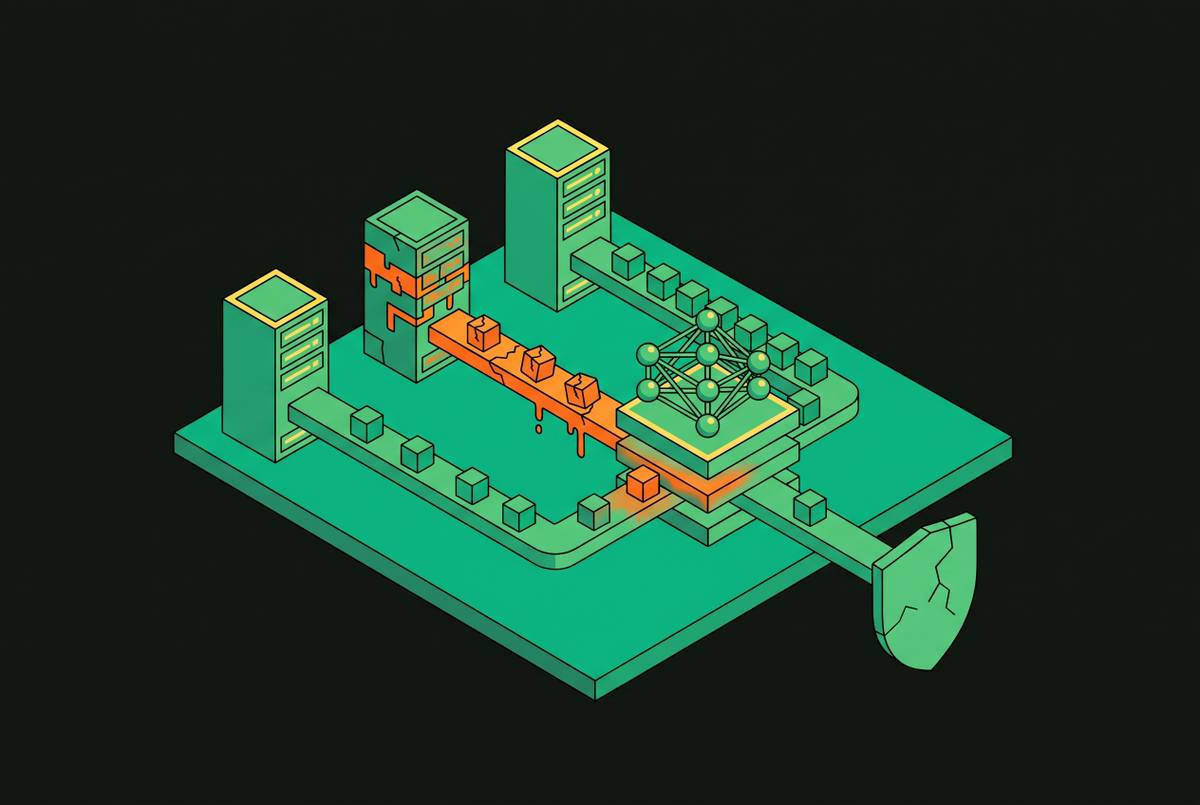
That opponent can also reach inside the pipeline. Poisoned training data, compromised dependencies, and malicious extensions can make a model worse as well as exploit one that is already outdated. Mandiant’s report documents UNC6780, also known as TeamPCP, targeting open-source AI ecosystems through supply chain compromises since February 2026. Its methods included prompt injection against AI coding assistants and LLM security scanners, theft of AI service credentials, and exfiltration of proprietary AI data.
VirusTotal researchers observed weaponized OpenClaw AI agent skills in February 2026 distributing droppers, backdoors, infostealers, and remote access tools disguised as helpful automation. In another February 2026 case, an AI coding agent added a malicious cryptocurrency-themed dependency to a legitimate trading project. Faster development had reduced scrutiny of third-party packages. A component selected to extend an agent’s usefulness can instead extend an adversary’s access.
GTIG observed malicious open-source packages in May 2026 installing LLM proxy services that routed traffic through compromised environments and bypassed regional access restrictions. Such compromises expose the dependencies through which a TI pipeline can be manipulated. Mandiant identifies the broader risk in a single poisoned source, dependency, or extension hook turning a trusted agent into an unauthorized conduit for reconnaissance, lateral movement, or sandbox breakout. Training infrastructure is therefore no trusted perimeter.
What drifted models actually do wrong in practice
False negatives let malicious activity pass, subtle patterns go unclassified, and inconsistent risk scores weaken the decisions built on them. False positives add to the noise that analysts have to sort through. Zvelo traces this deterioration from classification quality into filtering, detection, and policy enforcement.
Policy can become stale in parallel with the model. Static web application firewall, or WAF, rules and rate-limit policies configured for older signatures may miss dynamically mutating traffic. Updating a model does not by itself correct an outdated rule set. Conversely, configured protection cannot establish that the intelligence feeding a control remains accurate.
Mandiant says modern defense needs always-on, machine-speed capabilities even as teams already have more work than they can handle. Drift erodes precisely the automation intended to relieve that pressure. Analysts face more questionable signals as downstream controls become less dependable, widening the gap between workload and capacity. For TI vendors, the consequences also reach customers who depend on those classifications. A model-quality problem becomes a control problem, then a trust problem.
How to detect drift before it has already cost you
The response begins by treating detection as governance. Statistical alerts can identify a distribution change, but they cannot alone establish whether outputs remain contextually accurate or operationally useful. Some changes may come from legitimate activity, while small shifts in adversary language, intent, or infrastructure may stay below automated thresholds. Domain expertise is needed to interpret that difference.
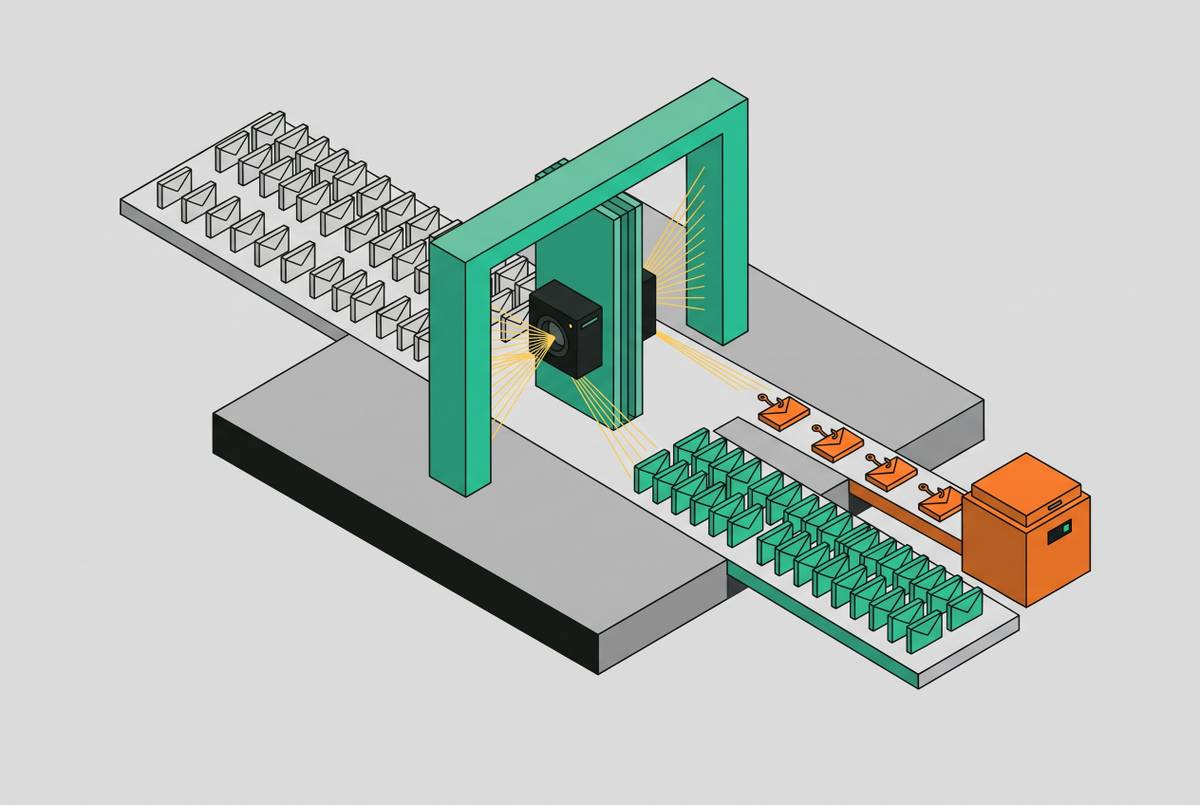
Zvelo’s framework combines continuous monitoring of classification accuracy and anomaly patterns with expert review of ambiguous outputs and edge cases. It also calls for validated corrections to feed retraining, ongoing evaluation of taxonomy alignment and risk definitions, and escalation when drift indicators cross defined thresholds. Those elements connect measurement to a decision. Without that connection, monitoring can report deviation while leaving the model’s fitness unresolved.
For teams implementing this approach, the first requirement is an inventory of pipeline models annotated with their risk and gate levels. That inventory establishes which components deserve the closest monitoring and how frequently they should be evaluated. Short-lived, auditable credentials for model endpoints make unauthorized queries visible in logs, including attempts to probe model behavior. Correlating those records with drift signals gives reviewers context that a distribution chart alone cannot provide.
Retraining cadences that match adversary tempo
Once drift is detected, the response cannot wait automatically for the next quarterly maintenance window. A calendar does not track adversary iteration. A model updated weekly may already lag several attack revisions when an agent-enabled campaign can be assembled and executed on the timeline GTIG documented. The appropriate cadence must therefore respond to drift signals and operational risk.
Continuous retraining means a rolling, structured process in which validated expert corrections feed model updates, with expert validation gates before deployment. Raw model outputs are not a substitute for corrected evidence. Feeding them back indiscriminately can incorporate adversarially induced errors into the next model, compounding the original failure. Naive online learning risks giving the adversary a vote in the curriculum.
The retraining process also needs its own security controls. Automated scanning of packages, skills, and model weights belongs within the pipeline because its inputs and dependencies are active targets. Fine-grained authorization, token rotation, and audit logs for queries to the model and updates to it keep the feedback loop itself safe. Without those protections, adversaries may observe when their techniques have been incorporated and adjust before the replacement model reaches production.
Why human supervision must be embedded in the pipeline, not layered on top of it
Human supervision supplies the judgment that these feedback loops require. Zvelo defines human-supervised AI as domain experts continually validating outputs against real-world conditions. That places supervision inside model maintenance. Experts review classifications that are unclear, spot changes in tradecraft, and check whether risk definitions still fit the environment. Their work shapes what the next model learns.
The strongest objection is that human review restores the latency and cognitive load automation was supposed to remove. The hybrid design avoids that bottleneck. AI handles high-volume signal triage, while people govern the model, validate edge cases, and make escalation decisions. They do not review every alert. Anthropic’s report reinforces the need for this division by describing sophisticated actors continually testing safeguards and attempting to circumvent detection, which requires defenders to interpret intent as safeguards evolve.
Oversight must also account for the agents themselves. Non-human identities are growing faster than security team headcount, making their authority a central governance concern. Rules for what an agent may access, query, or modify belong in the same architecture as checks on outputs and approval for retraining. Otherwise, a well-monitored model may still operate through an overprivileged agent. Human supervision is not a concession to automation’s shortcomings, but the design principle that makes its scale trustworthy.
Infrastructure requirements for a drift-resistant TI pipeline
That design requires identity-aware infrastructure with least-privilege controls at the tool and agent layer. Authority must be enforced where tools are called. If prompt injection persuades an agent to request a destructive action, tool-layer authorization can block the request at the edge before it reaches the server. The MCP endpoint security model established by the 2026-07-28 HTTP revision makes this enforceable without changing server code. Trust in a model’s output must not become unrestricted permission to act.
Detection also needs a shared view across controls. Unified WAF, DDoS mitigation, and bot management on a single telemetry plane allow behavioral models to adapt across vectors. This is the direction of web application and API protection, or WAAP, convergence. Mandiant’s M-Trends 2026 report links reliance on traditional tools to longer median dwell time overall and much longer dwell time for espionage-category intrusions.
Edge enforcement around the world puts rate limiting, parameter sanity checks, and AI inference one network hop from users. Configuration alone is not evidence of effective mitigation. A European government agency simulation found that configured Azure WAF rate-limit rules failed to activate against API-targeted vectors in three of seven attack scenarios, producing zero mitigation in those cases. That result illustrates the need to evaluate actual enforcement behavior. It does not establish that deployment location alone prevents drift.
Consumption-based billing for edge compute and inference removes charges for idle servers or wall-clock time that can favor centralized, infrequently updated models. That makes continuous retraining and always-on behavioral analysis viable beyond the largest teams. Economics cannot replace validation, but it can stop penalizing the cadence validation demands. A drift-resistant pipeline is built to question its own decisions while it is still making them.