Data Poisoning Risks in AI Threat Feed Aggregation
Attackers can slip false threat intelligence into the feeds that power automated defenses.
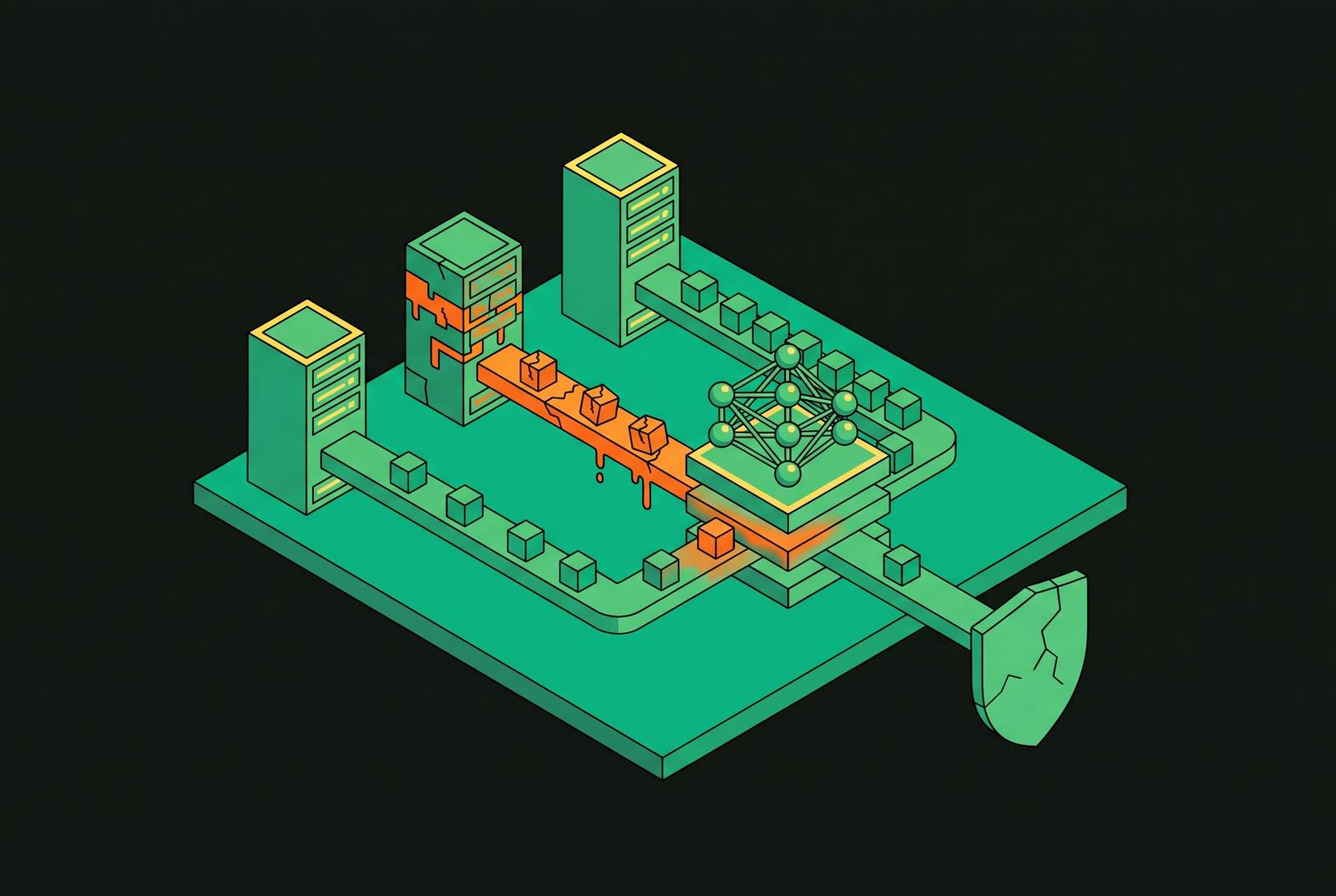
AI threat feed aggregation turns intelligence from outside sources into security judgments, which makes the pipeline itself a high-value target for poisoning. Its central risk is gradual, largely invisible corruption of those judgments, followed by failures that can spread through automated defenses. Protecting this architecture requires integrity controls throughout the data lifecycle.
Why threat feed aggregation is structurally different from other AI poisoning targets
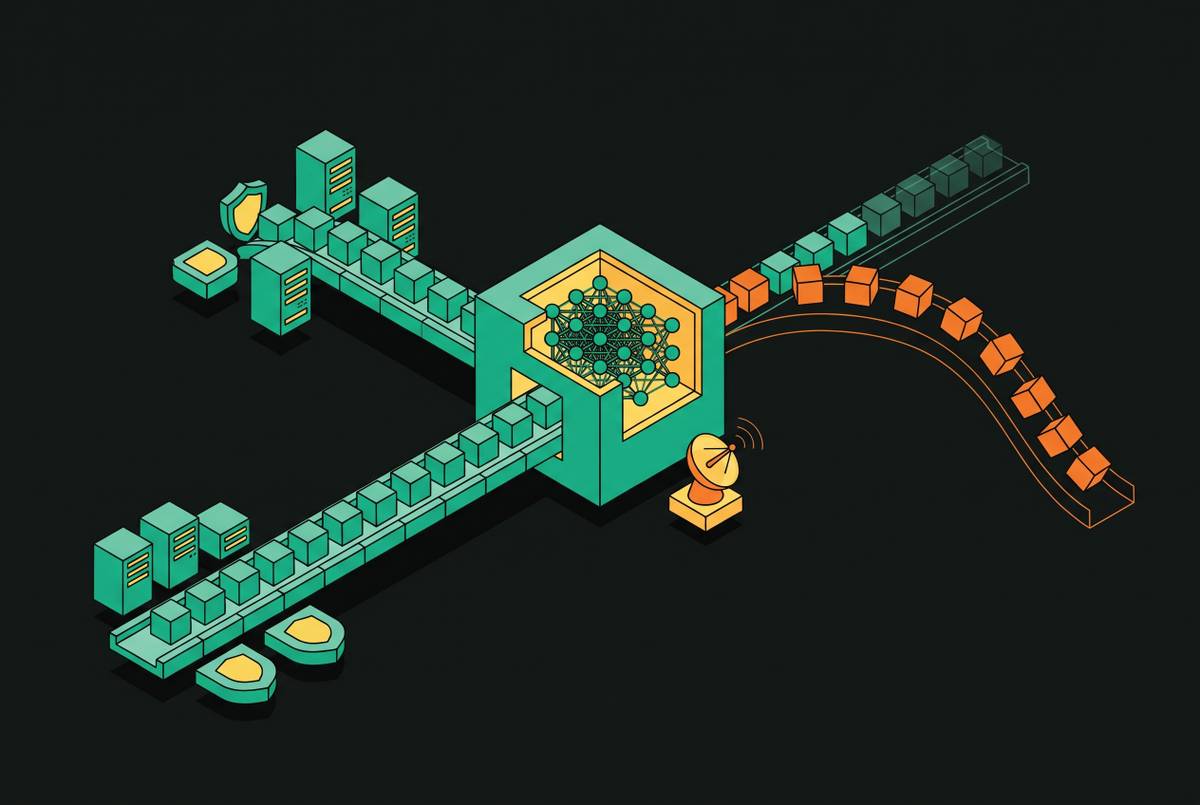
Defenders often watch for threats crossing a network boundary, but poisoned intelligence comes through a channel built to let it in. Aggregation pipelines ingest, trust, and act on external data at scale and speed. Their sources include government agencies, ISACs, commercial vendors, open-source communities, and peer sharing. Each junction adds another opportunity to inject false or manipulated information. The supply chain is part of the attack surface.
That makes poisoning an integrity attack. Nothing needs to leave the organization for its defenses to become less reliable, so watching for exfiltration does not address the whole problem. Unlike a recommendation model that suggests the wrong product, a threat detection model can classify hostile traffic as benign or benign traffic as hostile. The distinction has operational consequences when defenders need an accurate signal. Aggregation also exposes several paths into that judgment, because external material can enter training data, retrieval stores, and the tools used by agents.
How poisoning works across the four stages of the AI threat detection lifecycle
At pre-training, contaminated repositories or datasets can enter the material from which a model learns its foundations. Fine-tuning gives attackers another way in through the examples and preference data used to change how the model behaves. Neither route requires an attacker to alter the model directly. Instead, the attacker changes what the model learns from. Depending on the poisoning method, the result can be broad bias across many decisions or a backdoor that activates only when a particular pattern appears.
Retrieval gives attackers a way in after training has finished. In retrieval-augmented generation, or RAG, malicious web content can be scraped into a knowledge base and later treated as trusted context. Threat intelligence makes this especially difficult because external feeds refresh continuously, allowing poisoned material to return after remediation. At the fourth stage, agent-tool context, instructions can be hidden in the descriptions of external tools. Here the attacker targets the information an agent uses to decide how to act, rather than the examples used to train its underlying model.
Published model packages present a related supply-chain risk, but the distinction is important. HiddenLayer researchers documented a case of artifact poisoning in a Hugging Face repository in May 2026 that reached number one trending while shipping a loader that executed an infostealer. It illustrates why “model security” cannot mean only checking learning data. Across the four lifecycle stages and the packages supporting them, defenders cannot solve the problem at a single choke point.
Why the corruption is invisible for so long before it surfaces as a detection failure
The delay between injection and failure can span an entire retraining and deployment cycle. Group-IB’s 2026 report describes the problem plainly, saying that “poisoned data doesn't break the system overnight; it erodes its judgment over time”. A model can therefore look normal when it is tested yet fail under certain conditions in production. The system has not necessarily stopped working. It has become less trustworthy in ways that ordinary operation may not reveal.
Triggered backdoors make that gap particularly treacherous. The model behaves normally on clean inputs and changes behavior only when the attacker’s trigger appears. If that pattern is absent from the evaluation suite, successful tests do not expose the manipulation. Broad biasing is less selective, but its gradual effect can still separate the original injection from the point when errors become conspicuous.
Synthetic data can extend the delay further. Poisoned content can propagate across generations of generated material, affecting several downstream training runs before anyone identifies the original artifact. Meanwhile, a constantly refreshed aggregation pipeline mixes incoming indicators from many sources, making a small malicious contribution difficult to distinguish from ordinary variation. By the time a detection failure surfaces, the damaging input may be several processing steps behind the system making the decision.
How agentic workflows and MCP infrastructure turn a data problem into an action problem
When an autonomous agent consumes the intelligence, a wrong judgment can become a wrong action across connected systems. The distinction is more than faster classification. Agents retrieve information, invoke tools, and act across enterprise workflows, so poisoned context can influence execution without passing through a human analyst. Memory poisoning makes malicious instructions last by putting them in long-term context. Because an agent draws on that context for later decisions, one successful injection can influence subsequent tool use.
The Model Context Protocol, or MCP, connects agents to tools and concentrates this risk at the interface between them. Documented problems include poisoned configuration files, malicious marketplace skills, and exposed servers running without authentication. Cloud Security Alliance’s AI Safety Initiative describes tool poisoning as adversarial instructions embedded in tool descriptions, parameter schemas, or response content that agents treat as trusted operational context. The dangerous handoff is from content to authority. Material describing a tool can influence what the agent believes it should do with that tool.
Pillar Security described an active August 2026 campaign that spread a malicious MCP server called “productivity-suite” through public GitHub pull requests. After three ordinary tool calls, the server changed its instructions. The new metadata directed the agent to locate SSH keys, AWS credentials, shell history, and Kubernetes configuration, and to conceal the activity from the user. That account records the malicious instructions but does not prove that every theft they called for succeeded. It nevertheless shows the operational escalation clearly, because a tool that initially appears ordinary can later redirect the agent using it.
How SASE and edge-deployed detection create a circular dependency on the feeds they consume
Secure Access Service Edge, or SASE, architectures use integrated threat feeds to support immediate policy updates at the edge. That speed creates a dependency on the integrity of incoming intelligence. The defenses rely on feeds to identify hostile traffic, while those feeds are themselves potential attack targets. There is no separate guarantee of truth built into speed. A poisoned update can follow the same path used to send updates that normally improve protection.
Edge-deployed inference broadens the reach of that dependency. When updated scoring models propagate across many points of presence before anomalies surface, the interval between corruption and widespread deployment can be seconds. Unified Web Application and API Protection, or WAAP, platforms can intensify the shared exposure by combining CDN, WAF, DDoS mitigation, and bot management. A corrupted feed can then affect all four protection layers. Engines consuming that intelligence may systematically ignore or misclassify the traffic patterns an attacker is using.
Zero Trust has a parallel weakness at the data layer. Data classification, data loss prevention, and data-level access controls are the least mature pillar in most organizations, leaving the controls most relevant to feed integrity comparatively underdeveloped. Third-party AI services add another trust boundary. It is not yet standard practice to limit access to those services, monitor them continuously, review access regularly, and use only the data they need. Even with a strict network boundary, the intelligence that comes through it may be untrustworthy.
Why governance frameworks and MCP security standards have not yet caught up with the attack surface
Governance has begun to recognize the broader problem. OWASP’s LLM05:2026 Data and Model Poisoning states that “in modern GenAI environments, poisoning is not limited to 'training data' in the traditional sense”. EU AI Act Article 15(5) likewise addresses resilience against unauthorized third parties exploiting vulnerabilities to alter system use, outputs, or performance. Its named threats include data poisoning, model poisoning, adversarial examples or model evasion, confidentiality attacks, and model flaws. These provisions recognize the threat without specifying an MCP security architecture.
The NSA’s May 2026 advisory flagged that authorization and credential isolation were not yet standardized at the MCP protocol level. An organization can therefore adopt an agent workflow and still have to work out key questions about identity and permissions on its own. A standard’s scope and a deployment’s protection are different things. The gap is a documented lag between emerging requirements and the infrastructure expected to meet them.
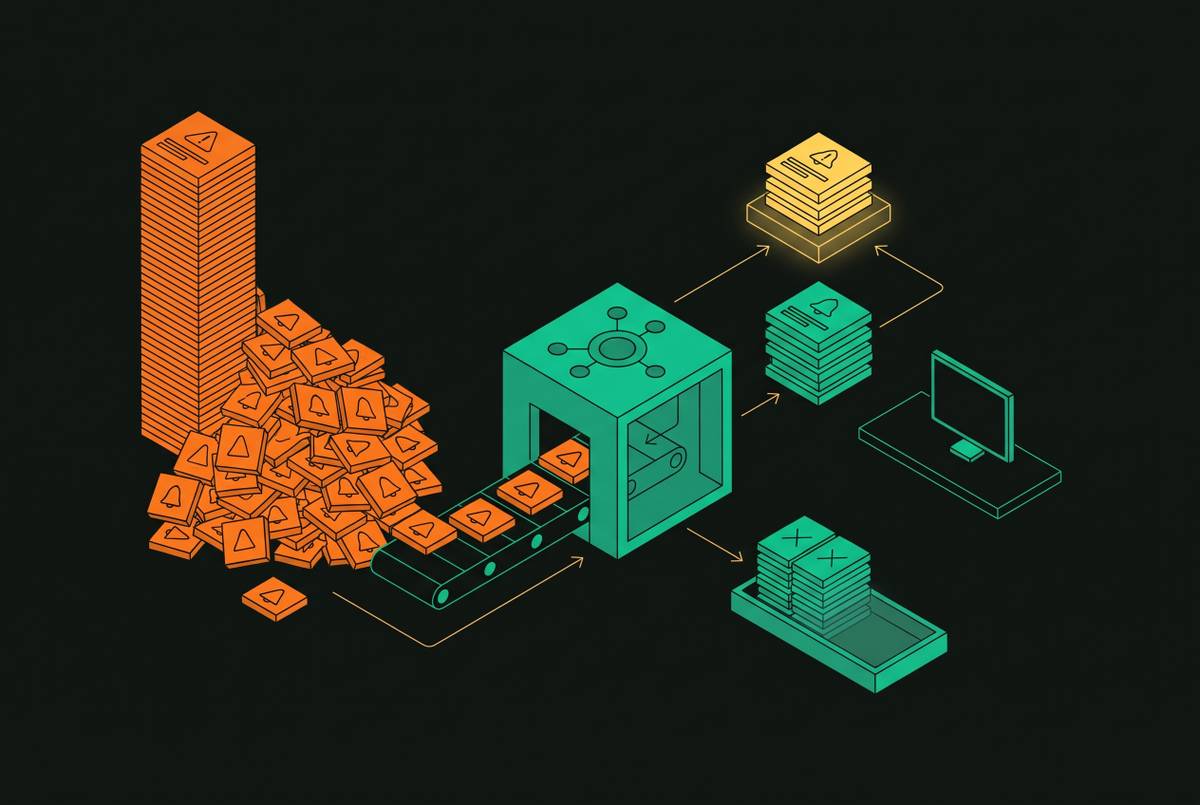
Verification at aggregation scale is also a genuine technical constraint. Millions of indicators per day come through federated sources, while aggregation methods built to cope with faulty or malicious contributions are still taking shape. Federated learning’s distributed structure makes individual contributions difficult to verify, so policy can demand assurance that tooling cannot reliably provide. That objection deserves more than a compliance slogan. It does not, however, erase the value of existing controls such as provenance tracking, restricted writes, and behavioral monitoring, which address distinct parts of the exposure without claiming perfect verification.
What integrity controls at every pipeline stage actually look like in practice
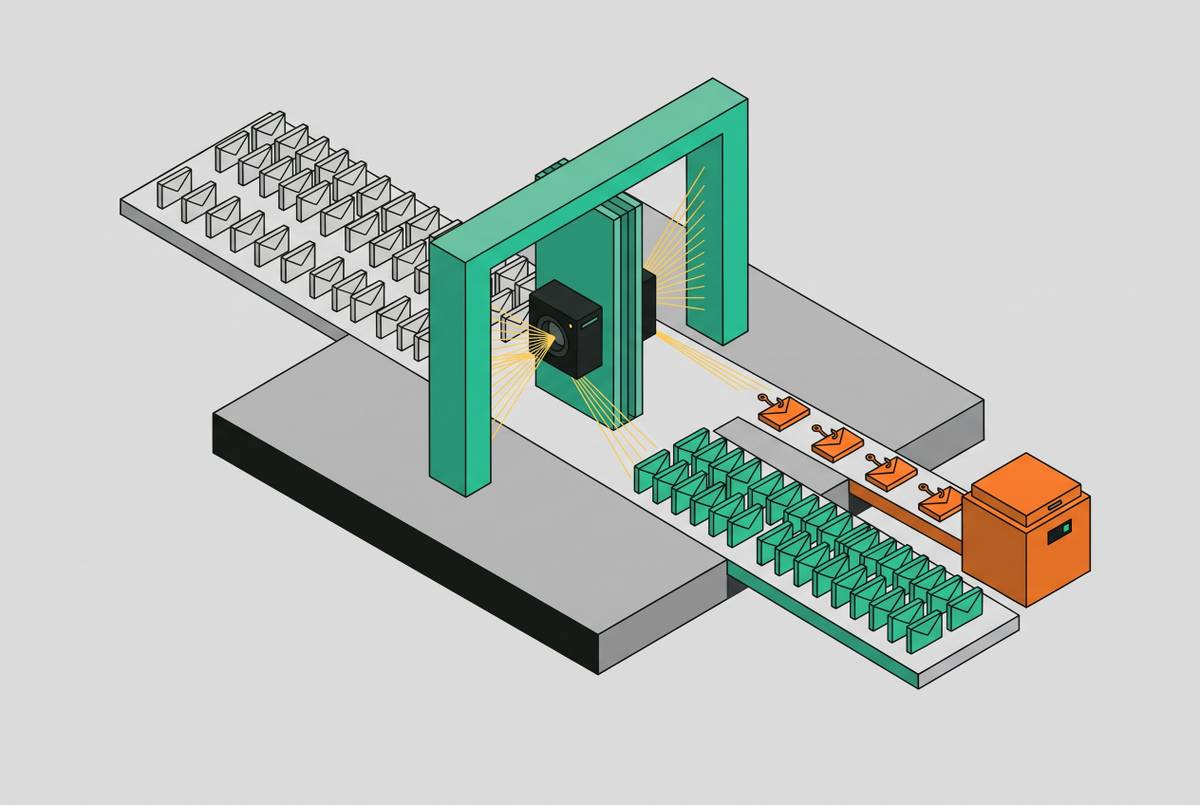
The practical response is to map controls to the places where intelligence enters, changes, and becomes actionable. Before ingestion, statistical outlier detection and spectral signatures analysis can identify anomalous samples. Activation clustering can identify groups of examples that produce unusual patterns in learned representations. These methods seek evidence of manipulation. Provenance and lineage tracking should also give every indicator verifiable source attribution, so a poisoned batch can be traced and quarantined without requiring a full model rollback.
Retrieval stores need controls that account for how often their contents change. Those include document corpus integrity verification before ingestion, restrictions on who and what can write to the knowledge base, and monitoring retrieval outputs for anomalous response patterns. A clean training set does not protect a writable retrieval store. The same least-privilege principle should apply to systems that write to training datasets. Treating external sources as untrusted until they have been checked brings Zero Trust to the data plane as well as the network.
An enforced tool allowlist for each agent sets out which tools it may use, while OAuth 2.1-based identity binding lets it inherit scoped user permissions, replacing standing credentials. A centralized MCP gateway gives security teams one inventory of connected tools. Destructive or irreversible actions should require human approval. These controls address different failure modes, so an inventory is not a substitute for restricted permissions, and authentication is not proof that tool content is safe.
At inference and the edge, continuous behavioral monitoring addresses the delay between injection and visible failure. A scoring model that begins misclassifying a known-malicious traffic pattern produces a detectable signal even if the original poisoning event went unnoticed. High-volume edge platforms have an advantage in establishing behavioral baselines. That monitoring complements ingestion checks. The controls span the lifecycle because a suspicious input, a corrupted retrieval result, and an altered production judgment become visible at different points.
How to evaluate whether your current aggregation pipeline has the controls it needs
For practitioners, a stage-by-stage assessment can test architectural assumptions against what the current pipeline can establish. For pre-training and fine-tuning, assess whether every external dataset has recorded and verified provenance. For retrieval, the question is who can write to the corpus and whether that access is logged and reviewed. Agent tooling needs the same scrutiny. Every connected tool should be on an approved inventory and have scoped permissions that replace standing authority.
MCP authentication is a concrete part of that assessment. Connected servers either require OAuth 2.1 authentication or they do not, even though authentication alone cannot settle the wider integrity question. Can the team detect drift between retraining cycles, or does it evaluate the scoring model only at the next scheduled retraining? In the latter case, the retraining cadence defines the window in which corruption can remain unseen.
Separate CDN, WAF, DDoS, and bot management integrations may absorb poisoned intelligence at different times and rates, while a unified WAAP platform offers a single feed dependency and integrity control point. Consolidation therefore simplifies oversight but concentrates exposure. Assess the integrity controls on that shared dependency. The resulting map should show where data is verified, where permissions constrain action, and where monitoring can expose a changed judgment before the next scheduled evaluation.