Dynamic Privilege Adjustment After Initial Authentication in Zero Trust
Continuous monitoring of identity, device, and behavior signals, not just login, defines Zero Trust.
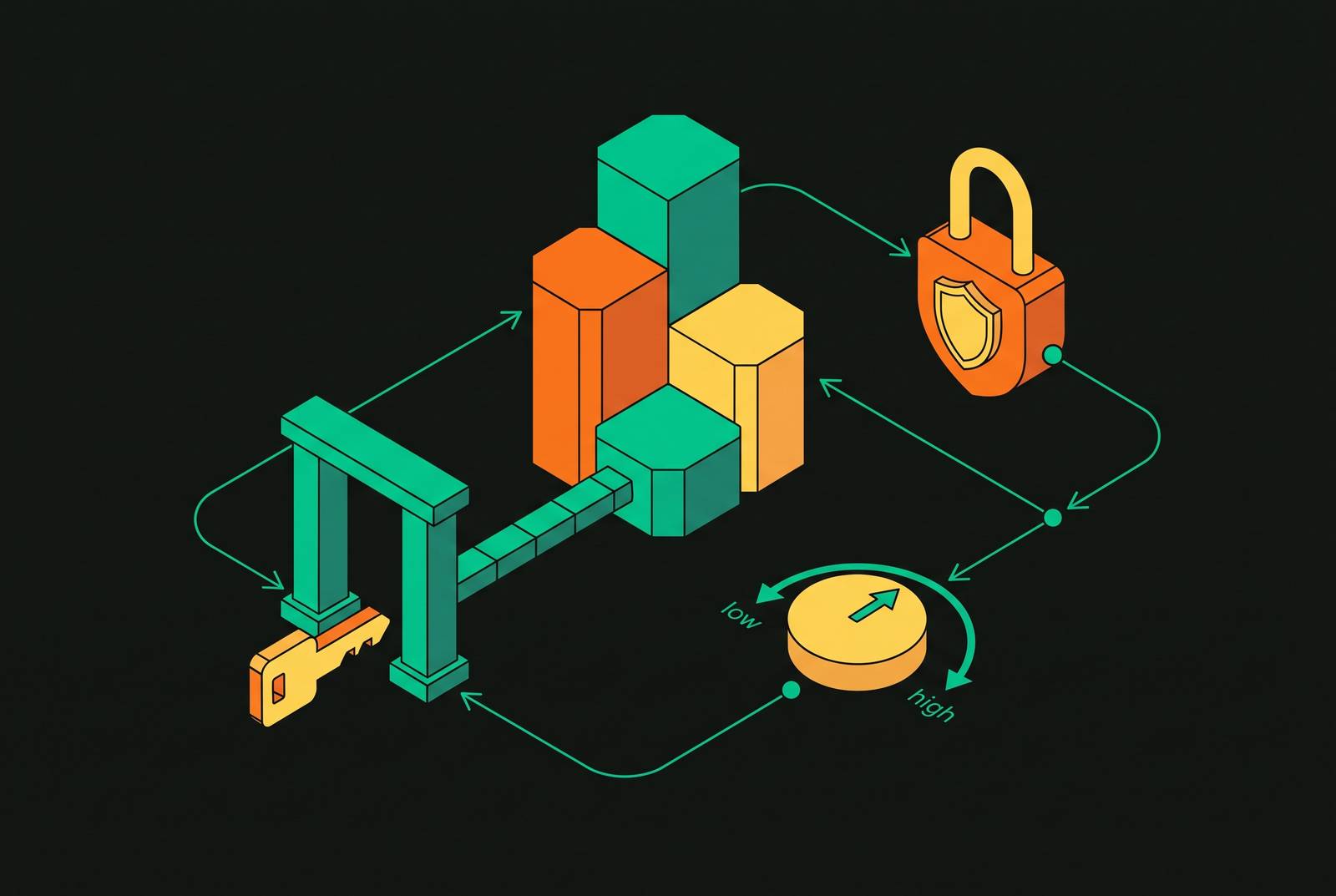
Dynamic privilege adjustment after initial authentication is the operational core of Zero Trust. The real test is whether a system can use changing identity, device, behavior, and location signals to expand, restrict, or revoke permissions during a session. Without that loop, Zero Trust is a perimeter model with a more ambitious name.
Why initial authentication cannot be the end of the trust decision
A device can become compromised after its user has successfully logged in. If access stays the same until the session ends, the system keeps granting permissions based on conditions that have since changed. Static roles amplify the problem because the compromised identity retains its full set of permissions rather than only the access its current context justifies. The login was valid, but its result has outlived the evidence supporting it.
Strong multi-factor authentication, or MFA, does not settle this problem. Some teams argue that a strong check at login is sufficient for most threat models, but that check cannot establish a device’s condition for the rest of the session. The Department of Defense describes the required shift as “from verify once at the perimeter to continual verification of each user, device, application, and transaction”.
What the Zero Trust policy engine is actually doing after login
NIST SP 800-207 defines the logical separation between a Policy Decision Point, or PDP, and a Policy Enforcement Point, or PEP. The PDP checks the signals it has against policy to decide whether to allow access. The PEP acts on that decision where an identity requests a resource. Together, they form a closed loop that persists throughout the session, separating the judgment about access from the mechanism that permits or prevents it.
That distinction matters because a decision has no protective value until it changes what the identity can do. The policy engine looks at identity, device posture, behavior, and location along with application context and data sensitivity. A material change in that evidence can trigger re-evaluation without waiting for another login. “Continuous” therefore does not have to mean polling every packet, nor does it mean repeatedly asking the user to prove the same thing.
A stable, low-risk session can proceed without interruption, while a changed signal can prompt a narrower grant or an additional verification step. Dynamic privilege adjustment is thus the practical meaning of “never trust, always verify” after authentication. It is not an optional layer above Zero Trust, because it is what prevents the initial decision from becoming permanent trust.
The four signal categories that drive mid-session privilege changes
Identity signals establish who is requesting access and what that identity is currently entitled to do. Authentication strength matters at the time of the request, including whether the current credential assertion remains valid and whether it was obtained through MFA. Role and entitlement state also matter because an organizational role can change while a session remains open. Identity-based access lets the PEP grant access to specific resources instead of the broad network access that a VPN-plus-perimeter model gives.
Device posture shows the state of the machine that makes the request. Its patch level, endpoint detection state, disk encryption, and certificate validity can all affect whether it should still have access. A device considered compliant at login may become non-compliant during the session, including when a newly published vulnerability exposes an unpatched condition. The relevant fact is its security status when it requests the resource. Identity alone cannot supply that evidence.
Behavioral signals reveal another blind spot because even with valid credentials and a compliant device, an action can be out of the ordinary. Unusual data volumes, access outside normal working hours, and lateral movement to unfamiliar resources can lead to a review of privileges. AI and machine learning can analyze these patterns at a scale beyond manual review and support automatic access adjustments when anomalies appear. Behavioral authentication also supports more granular verification without requiring explicit re-authentication for every check.
Location and network context place that activity in its surroundings. Geographic location, network type, and time of day contribute to the PDP’s risk assessment. A session moving from a known office IP to an unfamiliar foreign IP warrants restriction or step-up authentication even if its other signals remain steady. Application context and data sensitivity help determine how much that change matters for the requested resource. All four categories must feed one policy engine, because an attacker who holds steady on measured dimensions can exploit the dimension the system cannot see.
How privilege adjustment is actually enforced mid-session without forcing a new login
Once the PDP detects a meaningful change, enforcement need not jump straight from full access to a terminated session. The least disruptive response is scope narrowing, which removes part of the existing grant while leaving the session active. For example, degraded device posture can lead to the removal of write access to a sensitive repository. Micro-segmentation makes this selective response possible by dividing resources into isolated segments, allowing the PEP to confine access rather than treating the network as one undivided permission.
If the next action needs stronger evidence, step-up authentication asks for another factor without ending the session. The user stays logged in but must re-verify before getting access to a high-risk resource. When a signal is ambiguous, session quarantine can instead preserve access in a read-only or sandboxed state while security review begins. These responses distinguish uncertainty about a particular action from a judgment that all access must stop.
Session termination is the strongest response, revoking access entirely and requiring re-authentication. A device that loses its compliance certificate or a credential appearing in a threat intelligence feed can justify that outcome. The promise of mid-session adjustment is therefore not that a new login will never be required, but that lesser risks need not cause one. Continuous monitoring and logging of traffic and access attempts supply the PDP’s evidence and the audit trail. The NSA’s January 2026 guideline ties this graduated approach to seamless authentication, with unnecessary friction removed for stable, low-risk sessions and verification applied when signals change.
Where enforcement breaks down: the execution gap between Zero Trust policy and operational reality
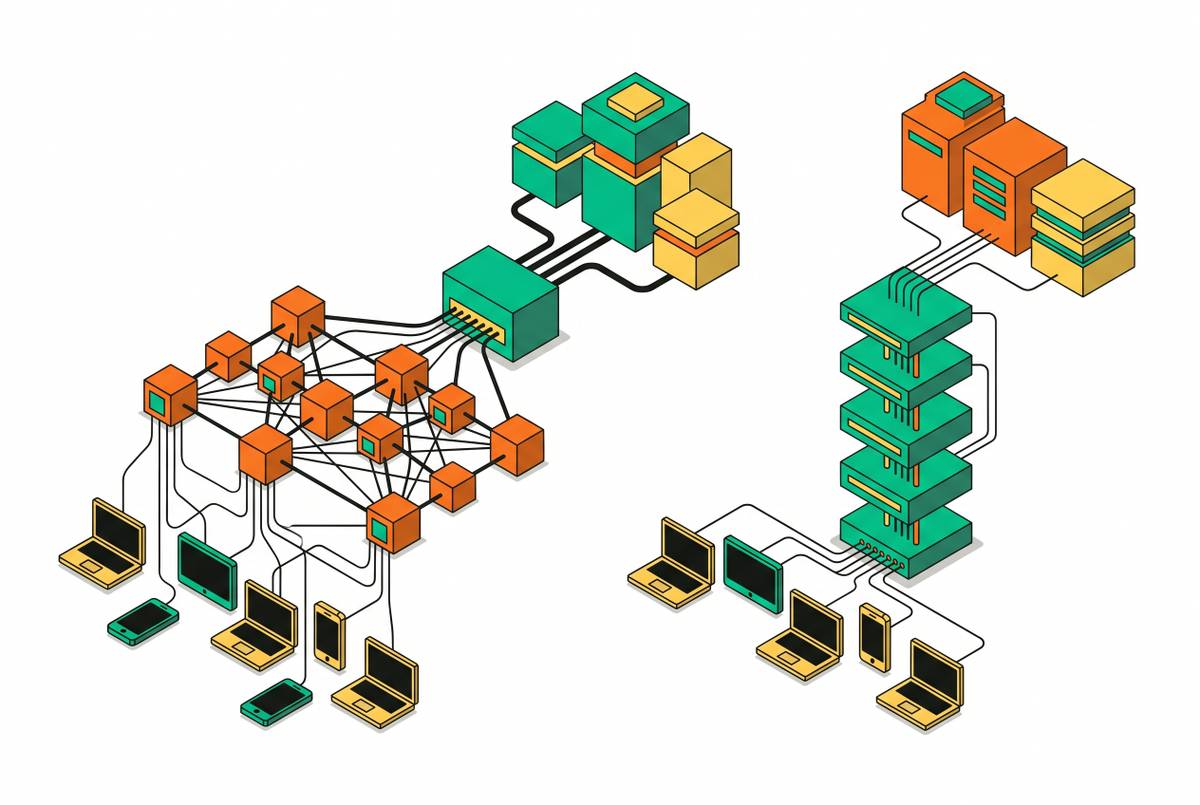
The architecture’s weak point in practice is often the connection between its parts. The identity providers, security tools, device management platforms, and network infrastructure may have come from different vendors and been bought at different times. Their presence does not mean their telemetry reaches a unified policy engine. Connecting these parts takes engineering work, and when the team lacks the skills to do it, automated policy can still depend on manual review. A stack of capable components is not automatically a functioning loop.
Fragmented telemetry makes the consequence concrete. Device posture may sit in one silo, identity state in another, and network context in a third, without their evidence meeting before an access decision. The PDP then makes a judgment from an incomplete picture, however sound its policy language may be. This is the structural answer to the claim that strong MFA is sufficient. MFA supplies one identity signal, but it cannot substitute for missing device, behavioral, and network evidence or make the PEP act on information it never receives.
Identity and Access Management, endpoint security, and cloud workload protection need to contribute to a coherent, policy-driven environment. The remedy is not necessarily another product, but a shared policy framework in which existing signals can inform the same access decision.
Over-privilege as the measurable symptom of a broken continuous-evaluation loop
Excessive entitlements expose this execution gap in a form teams can audit. When permissions remain after the context that justified them has changed, least privilege is not being enforced continuously. Those permissions remain available to a compromised identity. Static roles preserve the reach of the original grant even when the reasons for that grant have expired.
The problem grows in SaaS and cloud environments because there are more identity-to-resource mappings as applications and projects grow. Those mappings are frequently created but rarely audited or automatically revoked when employees change roles or leave projects. Fine-grained policies, dynamic role assignments, and context-based adjustments provide the corrective mechanism. Automation is needed to keep those policies current as responsibilities change, rather than relying on a later review to discover that access should already have ended.
A practical audit starts by asking whether any user’s permissions have ever been automatically reduced mid-session in response to a context change. If the answer is no, the continuous-evaluation loop is not closing. A policy that promises least privilege means little if the system cannot take away a privilege when the reason for it no longer holds.
AI agents as the newest identity that the continuous-evaluation loop must govern
Autonomous AI agents face this problem too. When agents use human credentials or shared API keys, their actions go into shared audit records, and the agents get permissions that may let them do more than their tasks require. Shared credentials also make rotation difficult at scale. The initiating user’s successful authentication is no better a permanent authorization for an agent than it is for a human. Every tool call, data access, and cross-agent communication needs its own verification and authorization.
The Model Context Protocol, or MCP, ecosystem illustrates how far implementation can lag that requirement. Research published in mid-2025 found hundreds of active MCP servers on the public internet with no authentication at all. Authentication is optional in the MCP specification, making that condition technically compliant but practically insecure. Optional authentication is a poor foundation for continuous authorization. Before privileges can be adjusted intelligently, the system needs an accountable identity whose actions it can govern.
The Cloud Security Alliance published the Agentic Trust Framework on February 2, 2026, applying Zero Trust principles to autonomous AI agents through a structured maturity model. Josh Woodruff authored the framework, while John Kindervag, Zero Trust’s original architect, wrote the foreword to its companion book. NIST announced the AI Agent Standards Initiative for Interoperable and Secure Innovation in February 2026. These efforts make agent identity governance part of formal work on standards.
What a genuine continuous-evaluation implementation looks like in practice
A genuine implementation has to pass three operational tests. It must be able to reduce privileges mid-session without requiring a new login, bring all four signal categories into one policy engine, and govern agent identities through the same loop as human identities. These tests establish whether the architecture can act, whether it has enough evidence to act well, and whether its coverage matches the identities using the system.
A unified policy framework with shared telemetry is the prerequisite for meeting those tests. The SASE delivery model supports that approach by converging SD-WAN and security service edge capabilities within a single policy framework. Its unified control plane allows access decisions to incorporate identity, device posture, application context, data sensitivity, and network conditions. A globally distributed enforcement layer can apply the same policy at each edge location, eliminating the need to backhaul traffic to a central PEP. That removes the central enforcement bottleneck whose latency and single point of failure can encourage VPN exceptions.
The measure of maturity is therefore not the strength of the first authentication or the number of tools carrying a Zero Trust label. It is whether a changed signal can produce a changed permission while the session is still running. If systems cannot actually reduce, restrict, or revoke access mid-session when that evidence changes, the perimeter model is still running under a new name.