End-to-End Testing Strategies for Distributed Edge Applications
Cross-service failures hide in timing gaps that unit tests can't see and that dashboards gloss over.
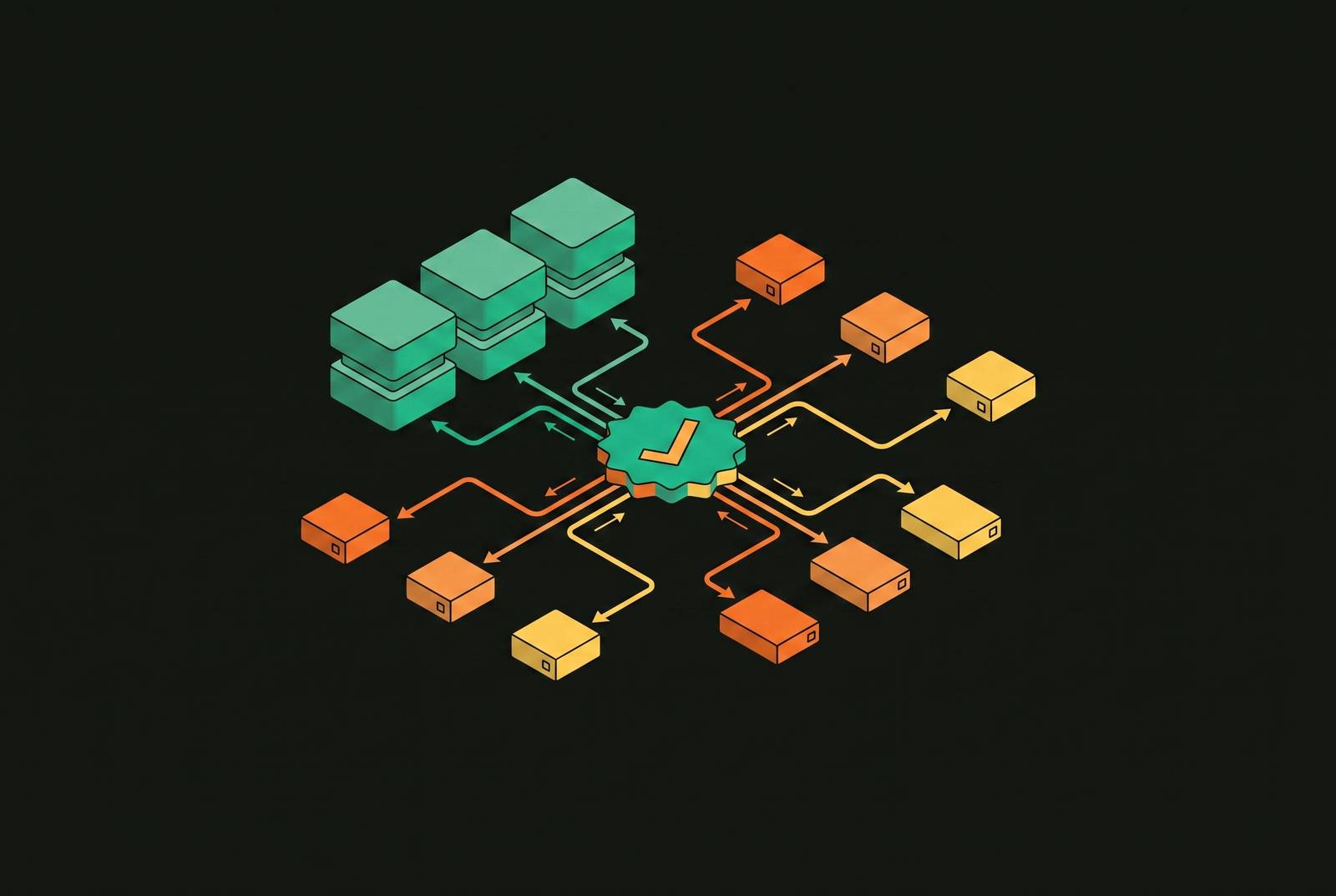
Distributed edge applications fail in places traditional testing pyramids don't look: the gap between services, not the service itself. A checkout function passes its unit tests, an order function passes its unit tests, and the two still can't agree on whether a timestamp means milliseconds or seconds. University of Illinois researchers found a substantial share of severe cloud application failures start at cross-system interaction points, and that single mismatch class of bug is common enough to explain most of them. Push those same services out to edge nodes scattered across regions, and geography adds a second axis of failure on top of the first. This piece maps both axes and the testing methods built to catch them before a customer does.
How the microservices testing problem compounds when services are distributed across edge nodes
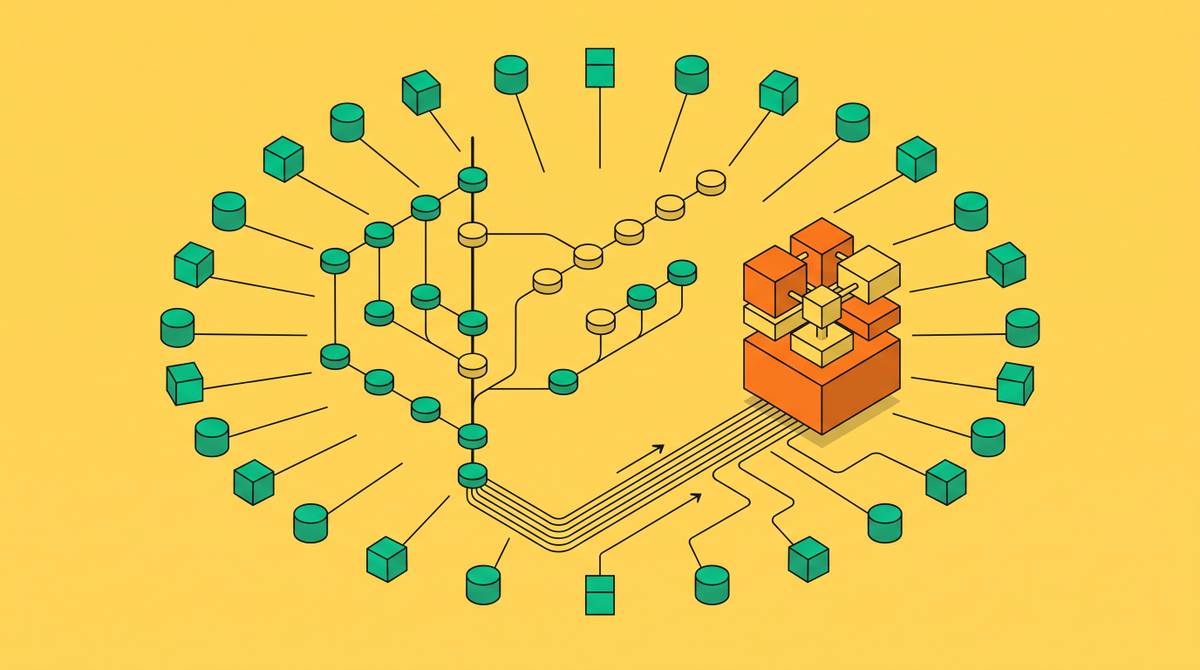
A microservices app might run tens or hundreds of services, each wired to its own database, cache, or third-party API. Bugs in that kind of system show up disproportionately at the seams, the handoffs between services, rather than inside any single one of them. Spread those services across edge locations and the seams multiply.
Consider what "the same service" even means at the edge. It's copied across dozens of physical locations, and a test environment can't cheaply mirror that spread. During a rolling deploy, node A might run version 12 of a service while node B is still on version 11, a version skew window that a single staging environment will never reproduce. And because edge architectures tend to favor shared-nothing design, each node holds its own local state, so a bug that depends on two nodes disagreeing about that state simply won't show up in a single-node test run.
Building a test environment that looks like production is genuinely hard: it means deploying many services, in the right versions, with the right configs, at the same time. Teams that give up on that and lean entirely on end-to-end tests fall into a trap sometimes called the distributed monolith: a test suite so slow and brittle it becomes the new deployment bottleneck, quietly undoing the speed edge architecture was supposed to buy. Skipping E2E entirely carries its own cost: it's the only layer that catches cross-system failures, and flying blind at that layer costs more than any amount of suite slowness. Microservice workloads need more validation points than a monolith ever did, which is exactly why picking a small number of high-signal tests matters more here than anywhere else.
What a well-scoped E2E test suite for edge workloads actually covers
The testing pyramid still applies at the edge: unit tests form the wide base, integration tests sit in the middle, and E2E tests occupy a narrow top tier, because they're slow, costly to run, and fragile by design. A well-built suite covers the handful of user journeys that actually matter end to end, leaving every edge case to the lower tiers; teams that forget this end up with E2E suites trying to do everyone else's job.
At the edge, a solid E2E test checks a few specific things. It walks a complete workflow across the full stack, UI through backend through database through any external integration, and checks the actual business outcome rather than a status code (an order landing correctly in the fulfillment system, not just a 200 response). It checks whether that same workflow behaves the same way when run from Region A versus Region B, and it checks that services still agree with each other on data formats and timing assumptions after being deployed independently.
What it skips matters just as much. Internal service logic already has unit test coverage. Every input permutation belongs to contract or integration tests, not the E2E tier, and putting it there anyway is how suites turn into hour-long slogs nobody wants to run before a merge. The ratio should hold the shape of the pyramid: hundreds of unit tests, a leaner layer of integration tests, and a deliberately small stack of E2E tests reserved for the journeys that actually move revenue or risk. At the edge, that small tier picks up a few extra jobs: checking geographic routing decisions, checking cache behavior per region, and testing failover paths directly.
The failure surfaces unique to edge: geography, partial degradation, and timing
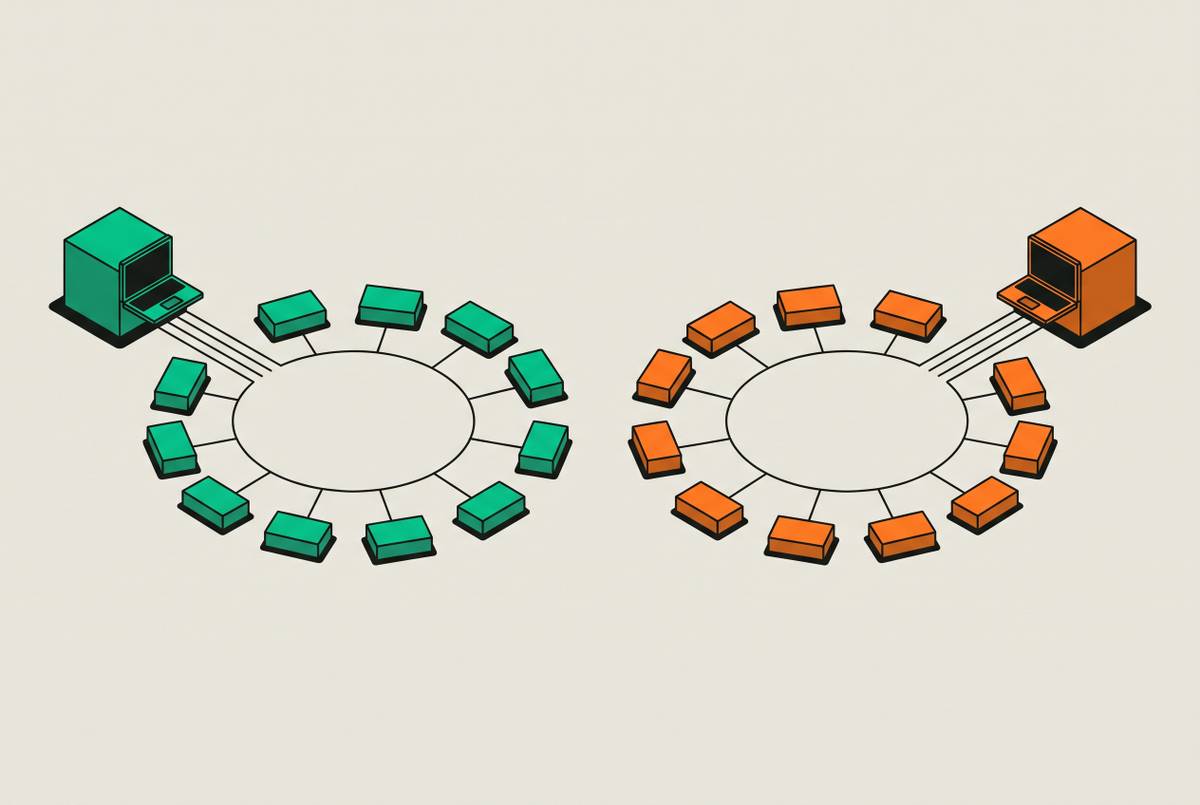
Geography breaks things quietly. A request to one edge node might hit stale cache while the same request to a neighboring node hits fresh data, a different replica, or even a different service version. Regional configuration or regulatory differences can cause silent divergence between two builds that are supposed to be identical, and any test that only ever runs from one origin point will never catch the race conditions that only show up once real network distance gets involved.
Partial degradation is its own animal, and it's the one most dashboards actively hide. One region slows down or drops requests while the rest of the system keeps serving traffic normally, so from a dashboard's view the system reads "up," even though users in that one region are getting inconsistent or wrong behavior. A pass/fail test run that happens to route through a healthy node reports green and misses the whole problem, because catching this means testing the degraded scenario on purpose, not just the happy path.
Timing rounds out the list. Small latency differences stack up across a multi-step workflow, since every hop between services adds its own overhead, and eventual consistency creates windows where a write in one region isn't visible in another for some real stretch of time. Event-driven systems can develop race conditions that only appear under actual network timing, never in a local dev environment. All three failure types share one trait: they're invisible to isolated unit tests and usually invisible to single-region integration tests too, which means catching them requires watching the system from more than one place at once.
Testing strategies that expose geography and partial-failure bugs before production does
Run the same E2E suite from test runners placed in different regions, not from one origin, and check that business outcomes match across all of them, not just that response codes match. That's how caching, routing, or config drift between regions gets caught before a user finds it.
Chaos testing earns its keep here. Deliberately knocking out or slowing down individual edge nodes during a test run checks whether failover paths actually kick in and whether degraded-mode behavior matches what was designed, rather than producing a silent wrong answer dressed up as a correct one.
Contract testing sits earlier in the pipeline and catches a cheaper version of the same bug: before any E2E test runs, it checks that two services still agree on schema, field types, and timing units. This is exactly the layer that would catch subtle data-format mismatches long before an expensive E2E run has to surface them, and any team skipping contract tests to save time is just moving the cost of those bugs downstream and making it bigger.
Shadow and canary deployments add something synthetic testing can't replicate: routing a slice of real production traffic to a new version and comparing its behavior against the old one before a full rollout. Real traffic carries real geographic distribution and real usage patterns, exactly what synthetic test data tends to miss.
Ephemeral per-branch environments round out the list: spinning up a full-stack copy of the system for each feature branch keeps one team's test run from contaminating a shared staging environment, and it lets geography and multi-service config get tested in isolation.
Distributed tracing as the connective tissue between test execution and failure diagnosis
A failure in a single service test points to an obvious location, while a failure in a distributed system might surface three hops away from its actual cause. Distributed tracing, with OpenTelemetry serving as a widely adopted instrumentation standard, captures the full path a request takes across services, nodes, and regions, and trace validation tools check that path against what was expected, not just whether the final response looked right.
That gives teams a few things a status code never could: automated confirmation that the right services ran in the right order, a latency breakdown by hop so a timing regression can be pinned to the exact leg of the journey that caused it, and a flag when a service or agent calls more dependencies than it should. That last one matters more than it sounds, because a failure mode in agentic systems where a workflow consumes far more resources than intended traces back to a tracing gap: the system technically worked, but nobody had checked the interaction path it was actually taking.
For teams already running an observability stack, trace validation is best treated as a new assertion added to infrastructure that's already there. The practical move is tying trace checks directly into the E2E pipeline, so a test that passes cleanly at the UI layer but shows an odd service interaction graph underneath still throws a warning instead of a green check mark.
Framework and tooling choices that hold up under distributed test conditions
The baseline requirement for edge E2E tooling is handling async behavior, geographic spread, and multi-service coordination, not just clicking buttons in a browser.
Playwright fits well here, and it's the better default over Selenium for anything new, full stop. Its built-in auto-wait behavior cuts down on flakiness caused by timing variance, which matters a great deal when response times differ by region rather than staying constant. It also runs across Chromium, Firefox, and WebKit natively, with mobile emulation built in rather than bolted on through a third-party plugin, which suits a test suite hitting edge endpoints from real browser clients around the world.
Selenium still has a place, mostly in large, already-established distributed test grids where the ecosystem's maturity outweighs the extra manual synchronization work it demands. That overhead is a real cost in an environment where timing is already an unknown; picking Selenium fresh, for a new edge test suite, means signing up for exactly the kind of flakiness the rest of this piece is trying to eliminate. There isn't a good argument for starting a greenfield edge suite on Selenium in 2025.
OpenTelemetry-based trace validators sit alongside browser frameworks rather than replacing them, checking the service interaction layer independently of whatever the UI reports back. AI-assisted synthetic data generation helps seed multi-region test environments with realistic, privacy-safe data without someone hand-building fixtures for every region.
No single tool covers every distributed failure surface, so the practical stack combines four layers: browser automation, service contract checks, trace validation, and environment provisioning. Tool sprawl recreates the exact fragmentation problem the tests are supposed to catch, so the better path is picking tools with native OpenTelemetry hooks and CI/CD integration over stitching together one-off scripts per service.
How edge compute infrastructure shapes what is testable and where tests should run
Edge functions run distributed by design, spread across the globe to sit physically close to users. That's the entire source of their latency advantage, and it's also the entire source of their testing difficulty. Serverless and edge runtimes share a property that makes debugging strange: there's no persistent box to SSH into, since each invocation is ephemeral and stateless, gone the moment it finishes.
That has a direct consequence for test environments. A local emulator can't reproduce real network topology, real geographic routing, or real multi-node state, so a test suite that only runs against a laptop-based emulator will miss every geography and timing bug described above. Testing against a local emulator and calling it done is the single most common shortcut teams take here, trading a real failure signal for a comfortable, cheap one, and getting production-like coverage means running tests against real edge infrastructure, even a non-production deployment of it.
Many systems combine serverless and edge runtimes across different layers. That means the test suite has to check both layers and how they talk to each other, not just one in isolation. Multi-tenant edge environments add another wrinkle: isolation mechanisms are meant to contain a failure inside one workload's boundary, but an isolation failure can still produce strange behavior in a neighboring workload, and that only shows up under real multi-tenant load, never in a single-tenant test.
The underlying rule: test environment topology should mirror production topology, geography included, not just the list of services running. There's a rare bit of good news buried in here, though: a network built to place compute within milliseconds of users also shrinks the latency variance that makes timing bugs so hard to reproduce in the first place. Testability and performance work in the same direction on this one.
Applying these strategies to agentic workflows running at the edge
Agentic workflows inherit every cross-system failure microservices already have, then add two new ones: execution paths that aren't deterministic, and resource use that isn't bounded.
The API-credit burn mentioned earlier is the clearest example of what an untested agentic system looks like. The workflow wasn't broken in any conventional sense; it was simply never tested for what happens when a reasoning loop runs longer than expected or a call count multiplies past what anyone planned for.
Testing agentic workflows well means adding a few checks that don't exist in a normal E2E suite. Interaction path validation confirms the agent called the services it was supposed to, in the order it was supposed to, rather than fanning out into unplanned territory. Latency compounding checks track cumulative delay across each step of a multi-step agent chain, since a workflow that's fine at step two can be well over budget by step nine. Cost ceiling assertions test that spending limits actually trigger before a runaway loop drains a budget, not after, and safety checks confirm the agent can't take an irreversible action outside the boundaries it was scoped to.
Shadow deployment works for agents the same way it works for services: route a slice of production traffic to a new agent version and compare its output quality against the old one before flipping the switch fully. LLM-as-a-judge evaluation adds a scalable layer on top of that, automating quality checks on agent output and surfacing faithfulness or completeness problems without someone having to read every transcript by hand. This is the same discipline applied to a system that happens to make its own decisions about which door to open next.